Physical Address
304 North Cardinal St.
Dorchester Center, MA 02124
Physical Address
304 North Cardinal St.
Dorchester Center, MA 02124
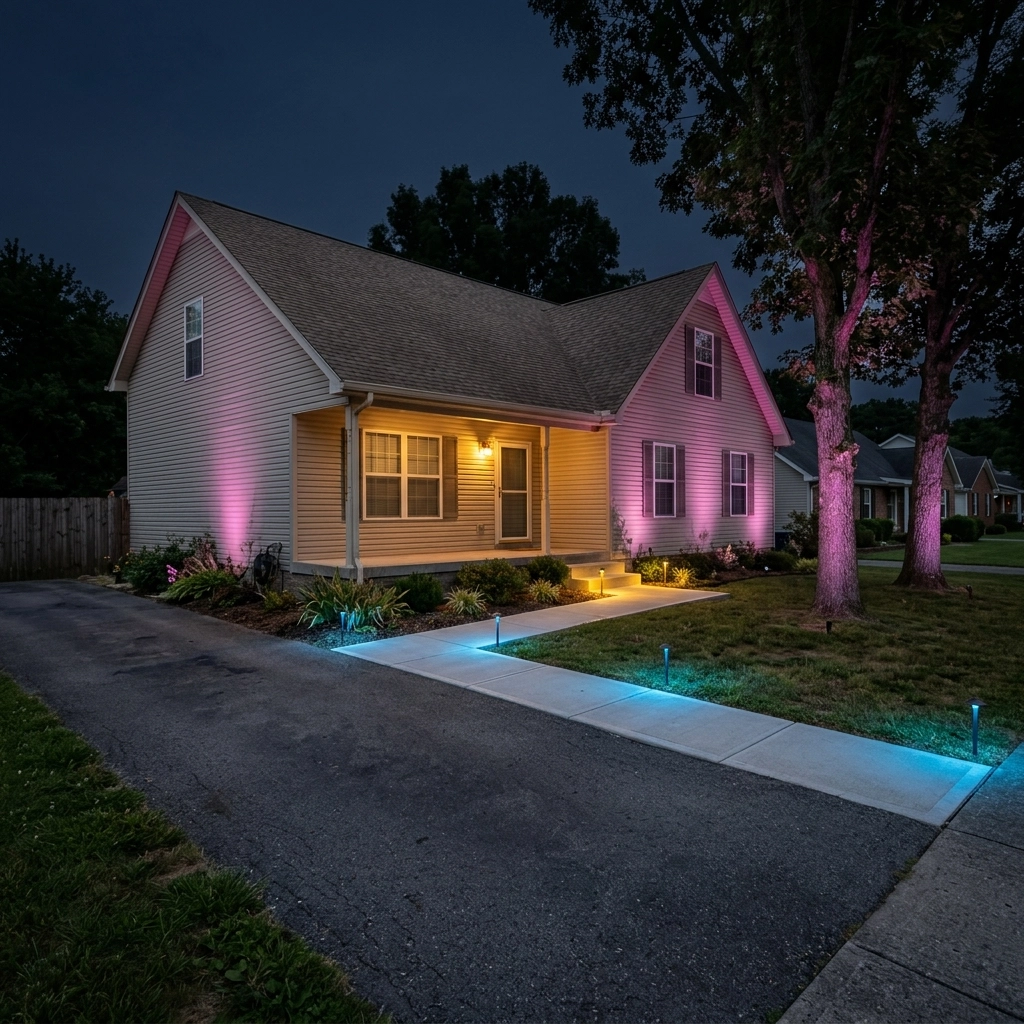
To fix landscape lighting mistakes in Lexington, focus on reducing glare, using high-quality low-voltage fixtures, and creating a layered design that highlights both architecture and foliage without over-illuminating the property.
Time to read: 7 minutes
If you’ve spent any time driving through neighborhoods like Palomar or Chevy Chase at night, you’ve probably seen the difference between a house that "glows" and a house that looks like a high-security prison. Most homeowners in Central Kentucky want to improve their curb appeal, but many end up making mistakes that actually detract from their home's value.
At Evening Glow LLC, we see these issues all the time. Whether it’s DIY projects gone wrong or systems installed by companies that don't specialize in lighting, the mistakes are usually the same. As a veteran-owned business, we believe in doing things right the first time.
Here are the seven most common mistakes you’re making with your Lexington landscape lighting and exactly how to fix them.
One of the most frequent errors is lining a walkway with perfectly spaced, identical path lights. While it seems logical to light a path, placing them in a straight, symmetrical line creates an "airport runway" look that feels clinical and boring.
The Fix: Stagger your lights. Instead of a straight line, place fixtures on alternating sides of the path. Use the surrounding landscape, like a hosta or a boxwood, to partially shield the light. This creates a natural, meandering feel. For a more professional touch, consider Lexington landscape lighting designs that use downlighting from nearby trees to wash the path in light rather than sticking fixtures in the dirt every three feet.
It’s tempting to grab a six-pack of solar lights from a local hardware store in Nicholasville and call it a day. However, these fixtures are usually made of thin plastic or cheap aluminum that corrodes in the Kentucky humidity. They often fail within a single season, and the light output is weak and "blueish."
The Fix: Invest in professional-grade, solid brass or copper fixtures. These materials withstand the elements and actually look better as they age. At Evening Glow, we provide custom fixtures that come with a lifetime warranty. Because we use low-voltage LED technology, you get a much warmer, more inviting light that costs pennies to run.
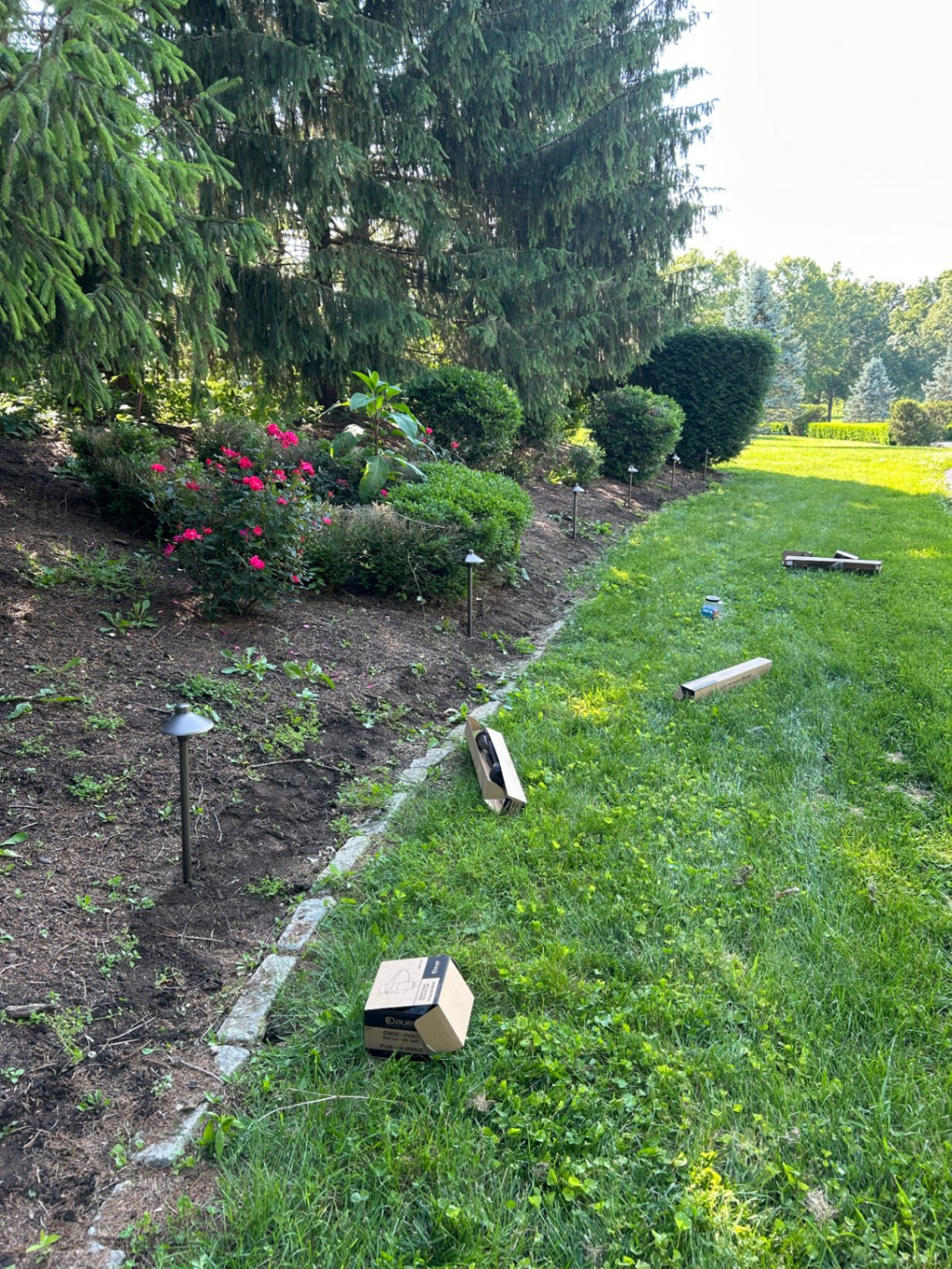
A common mistake is installing fixtures that look like clunky eyesores during the day. If your front yard in Versailles looks like a field of black plastic mushrooms at 2:00 PM, the lighting is failing half its job.
The Fix: Aim for an "invisible-by-day" installation. This means tucking fixtures into the landscape, using smaller-profile accent lights, and ensuring all wiring is buried deep enough that it won't be snagged by a lawnmower or edger. The goal is for the light to be the star at night, while the hardware disappears during the day. Check out our portfolio to see how we hide our systems in plain sight.
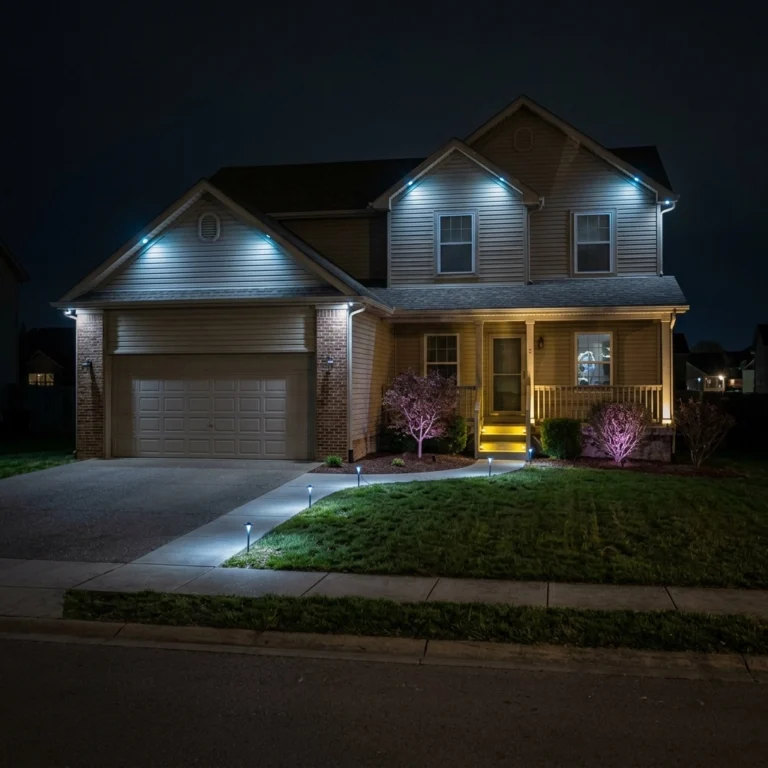
There is a big difference between lighting an object and creating a glare bomb. If you can see the bare bulb or the light source from the street (or worse, your neighbor's bedroom window), you have a glare problem. This is especially common with DIY floodlights mounted over a garage.
The Fix: Use fixtures with shields or "shrouds" that direct the light exactly where it needs to go. Instead of one massive floodlight, use several smaller architectural lights to highlight the texture of your stone or brickwork. This adds depth without the blinding "interrogation room" vibe.
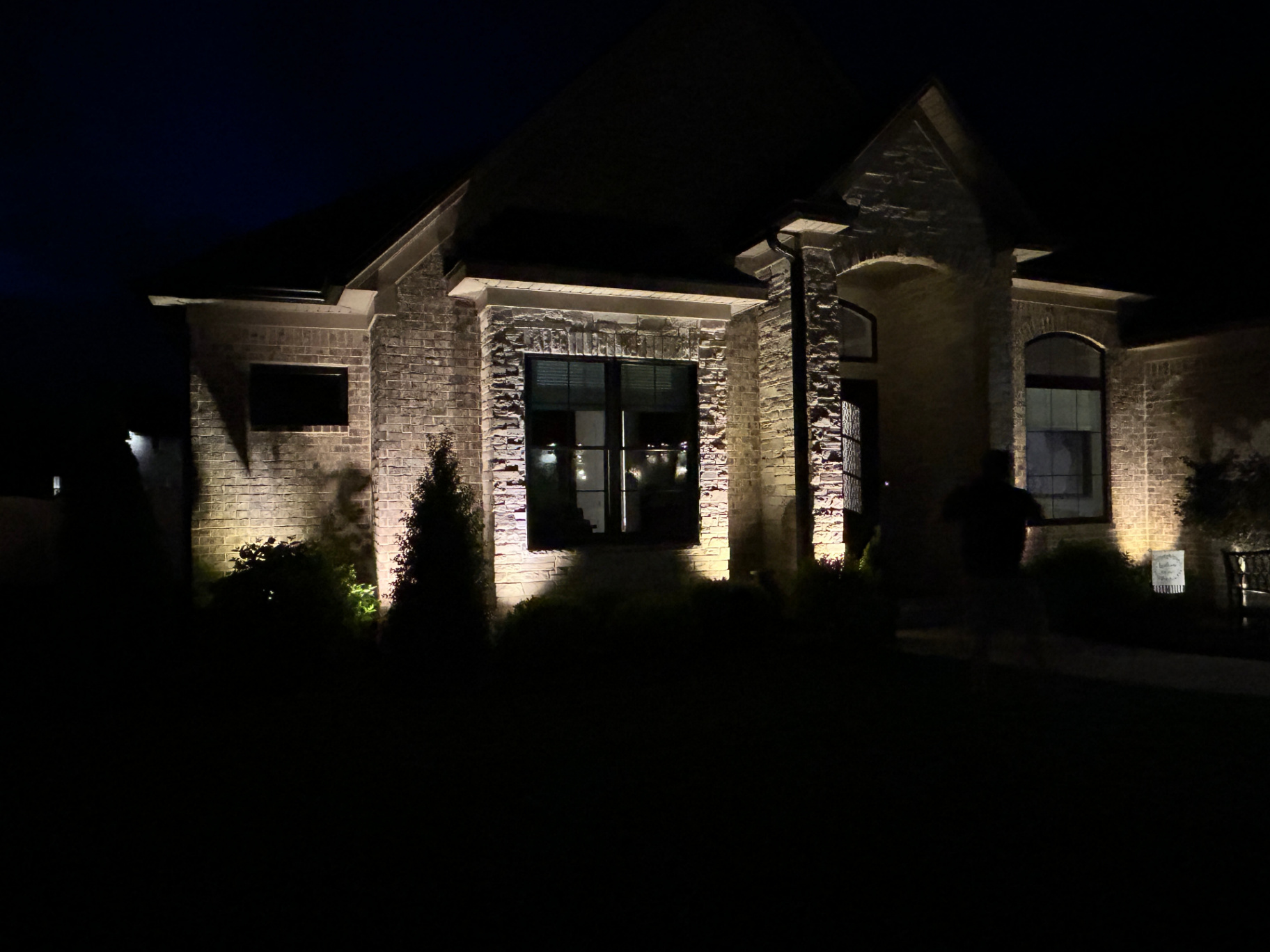
Many homeowners focus only on the house or only on the trees. This creates a "flat" look. If you only light the front of your home, the rest of the yard disappears into a black hole, making the space feel smaller and less secure.
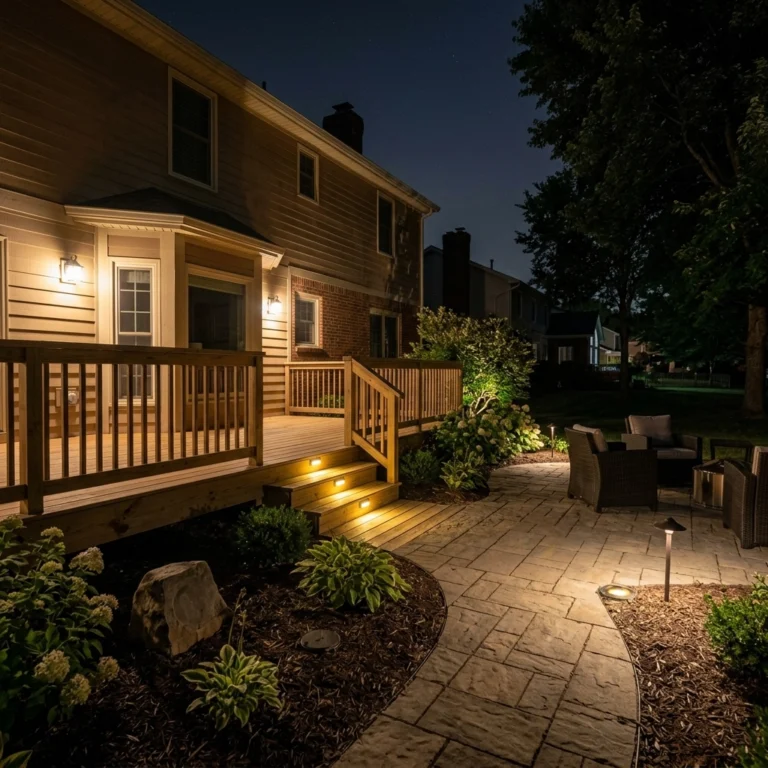
The Fix: Think in three layers:
Combining these layers creates a 3D effect that makes your property in Richmond or Lexington look much larger at night.
Ever notice how some houses look warm and cozy while others look like a cold, sterile hospital wing? That’s color temperature, measured in Kelvins (K). Most "cool white" LEDs are 5000K or higher, which is way too blue for a residential setting.
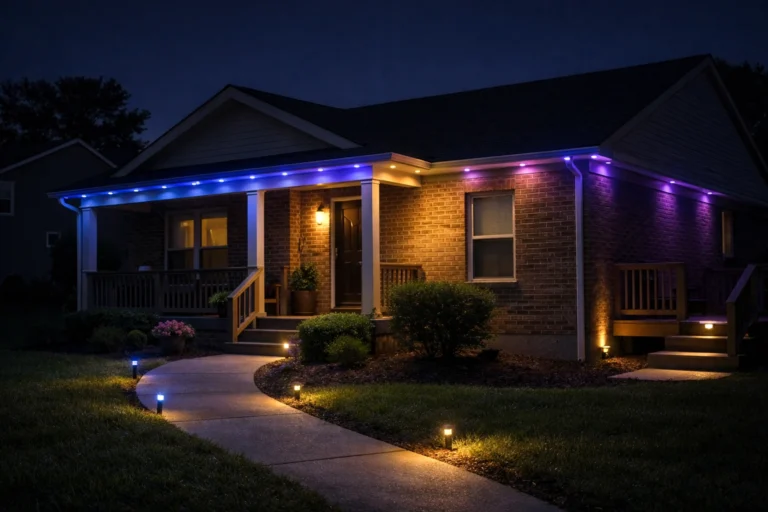
The Fix: Stick to the "Warm White" range, specifically 2700K to 3000K. This temperature mimics the soft glow of an incandescent bulb or a candle. It makes the red in your bricks pop and the green in your Japanese Maples look lush rather than gray. If you want more versatility, our permanent architectural lighting allows you to change colors via an app, but the default should always be a warm, welcoming white.

Landscape lighting isn't a "set it and forget it" project. In Central Kentucky, we have fast-growing grass and shrubs. Over time, your bushes will grow over your fixtures, or the lenses will get covered in hard water deposits from your irrigation system.
The Fix: Schedule regular check-ups. Every six months, walk your property to trim back any foliage blocking the light and wipe down the lenses. If you don't have the time, we offer professional lighting maintenance services to keep everything aimed and cleaned. We’ll even check your transformer and wire connections to ensure everything is operating safely.
While DIY can be fun for some projects, landscape lighting involves electricity, digging, and a fair bit of artistry. At Evening Glow LLC, we take the guesswork out of it. Being veteran-owned means we bring discipline and precision to every job, we don't cut corners on wiring, and we don't use subpar materials.
Our systems are designed to be permanent additions to your home that increase its value and security. Plus, with our lifetime warranty, you never have to worry about a fixture failing.
Q: Can I use solar lights instead of low-voltage?
A: You can, but you'll likely be disappointed. Solar lights rely on the sun (which is hit-or-miss in Kentucky winters) and lack the power to actually highlight architectural features or tall trees. Low-voltage systems are much more reliable and provide a consistent, professional look.
Q: Will burying wires ruin my landscaping?
A: Not if it’s done right. We use specialized tools to "slit" the sod, tuck the wire 6 inches deep, and press the sod back down. Usually, you can’t even tell we were there by the next day. This is a core part of our "invisible-by-day" philosophy.
Q: How much does professional landscape lighting cost in Lexington?
A: It varies based on the size of the property and the number of fixtures. We recommend checking our pricing page for a general idea, or booking a walkthrough for a custom quote tailored to your home’s specific needs.
Q: Do you offer services outside of Lexington?
A: Yes, we serve the broader Central Kentucky area, including Versailles, Georgetown, Nicholasville, and Richmond.
Don't guess on what your home needs. At Evening Glow, we design custom architectural lighting for homes across Central Kentucky. Click here to book a free, no-pressure design walkthrough and let's see what your property looks like at night.