Physical Address
304 North Cardinal St.
Dorchester Center, MA 02124
Physical Address
304 North Cardinal St.
Dorchester Center, MA 02124
Reading time: 5 minutes
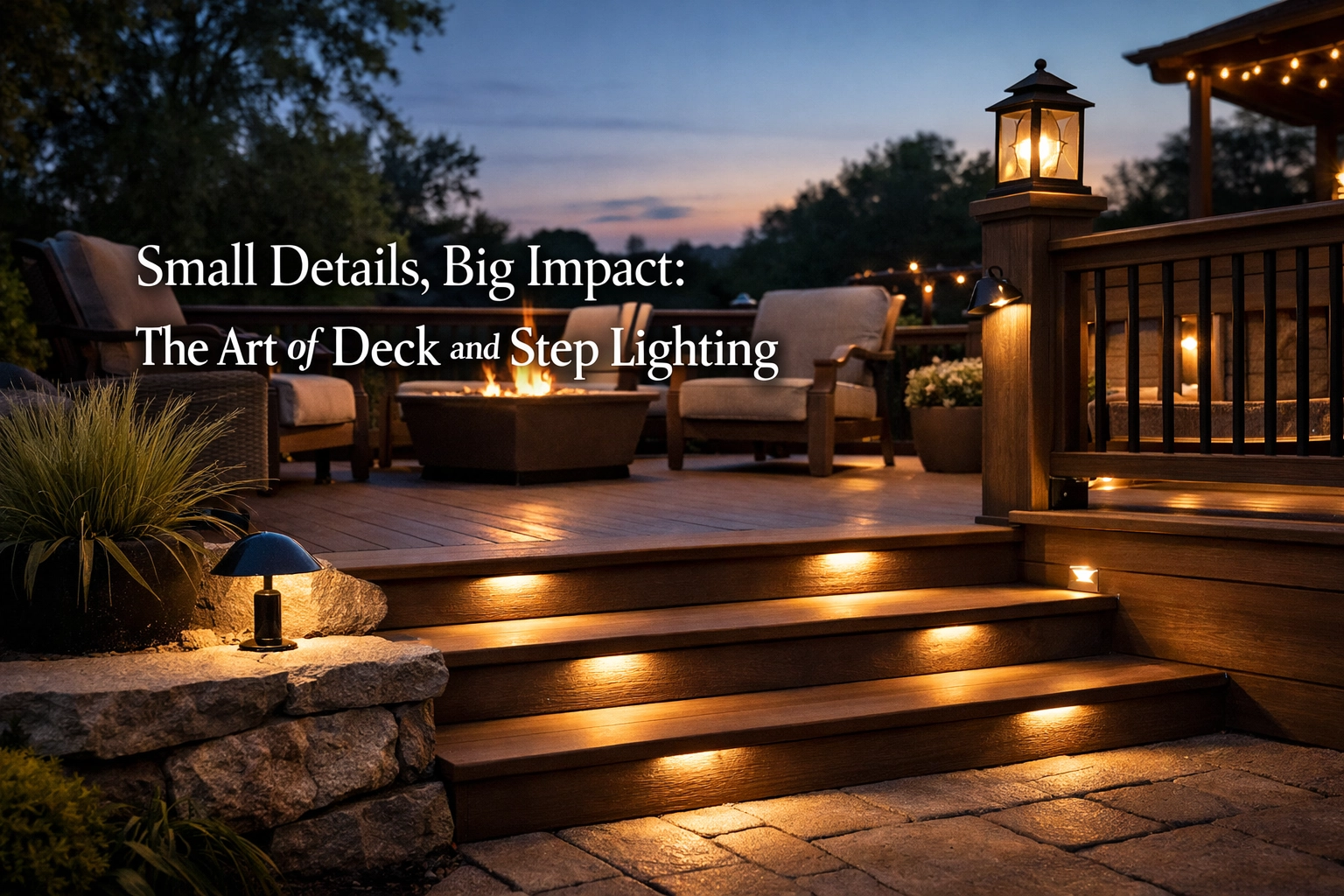
Look, here's the thing about outdoor lighting, most people think bigger is always better. More fixtures, brighter bulbs, flood the whole yard with light. But after installing hundreds of lighting systems across Central Kentucky, I've learned that it's actually the smallest details that create the biggest wow factor. And nowhere is that more true than with deck and step lighting.
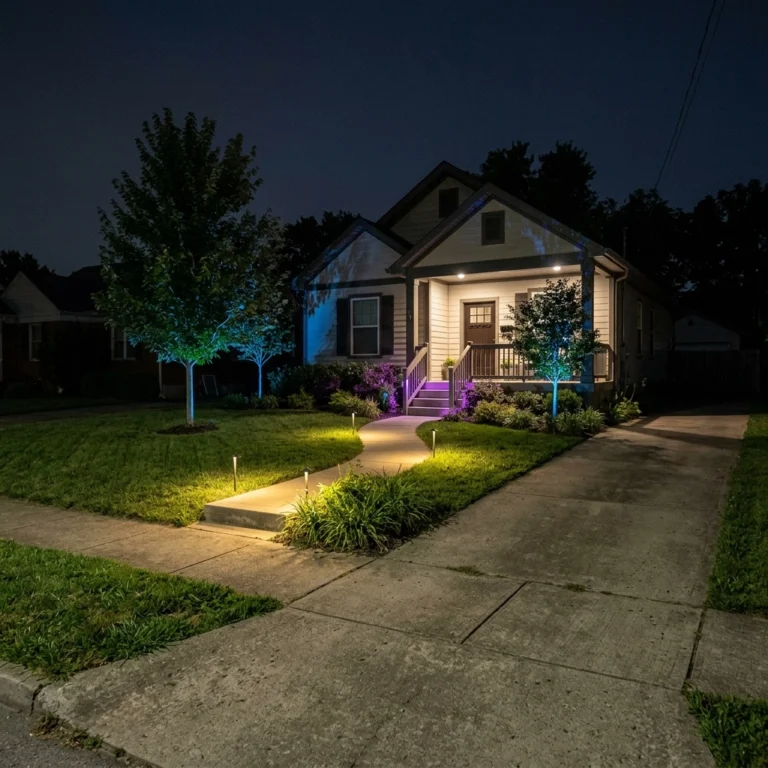
You know that moment when you walk up to a beautifully lit entryway at night and think, "Wow, this place looks expensive"? Nine times out of ten, it's not because they spent a fortune on massive fixtures. It's because someone paid attention to the little things, the gentle glow on each step, the subtle accent on the handrail, the shadows that define the architecture instead of washing it out.
Let's talk about how to nail those details.
Sure, step lights keep you from eating concrete when you're carrying groceries after dark. That's the obvious part. But thinking of them as only safety features is like buying a sports car just to get to work: you're missing the whole point.
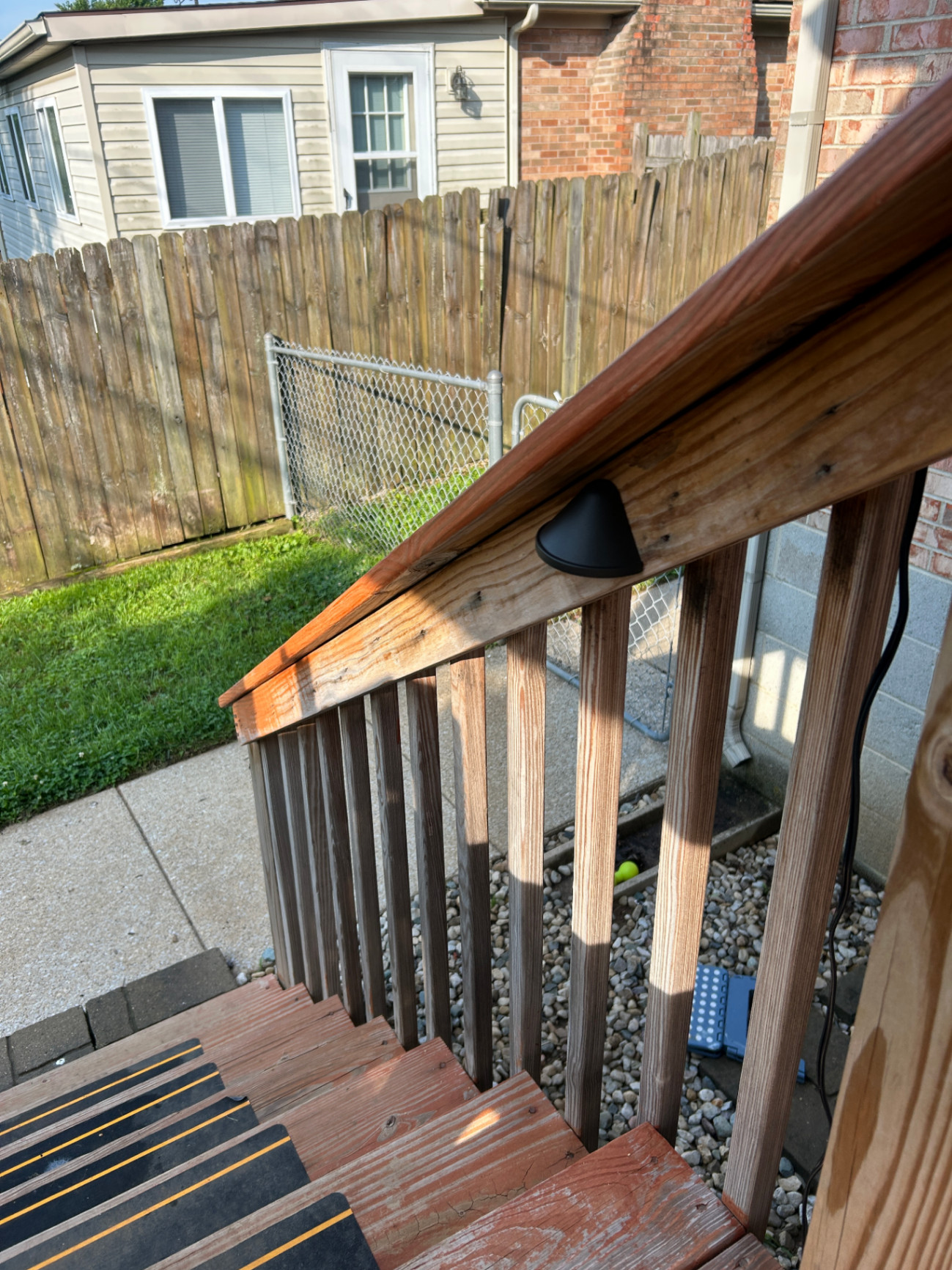
When you install step lighting correctly, you're doing three things at once:
The trick is balance. You need enough light to see where you're stepping, but not so much that your deck looks like a grocery store parking lot at 2 AM. Nobody wants that.
Here's where a lot of DIY projects go sideways. You can buy the most beautiful fixtures on Amazon, but if the installation is sloppy, you're going to have problems. And in outdoor lighting, "problems" usually means water damage, electrical failures, or fixtures that look terrible during the day.
Trenching matters more than you think. When we install low-voltage systems, we're not just burying wire: we're creating a pathway that protects your electrical connections from moisture, shifting soil, and the mower you're going to run over it with in six months. Proper trenching means digging to the right depth (usually 6-8 inches for low-voltage), using conduit where it matters, and thinking about drainage so water doesn't pool around your connections.
GFCI protection is non-negotiable. If you're running power outdoors: even low-voltage systems that start with 120V transformers: you need GFCI (Ground Fault Circuit Interrupter) protection. It's not just code compliance; it's the thing that keeps your system from becoming a hazard when water inevitably gets where it shouldn't. We install GFCI-protected outlets or transformers with built-in GFCI for every single project. No exceptions.
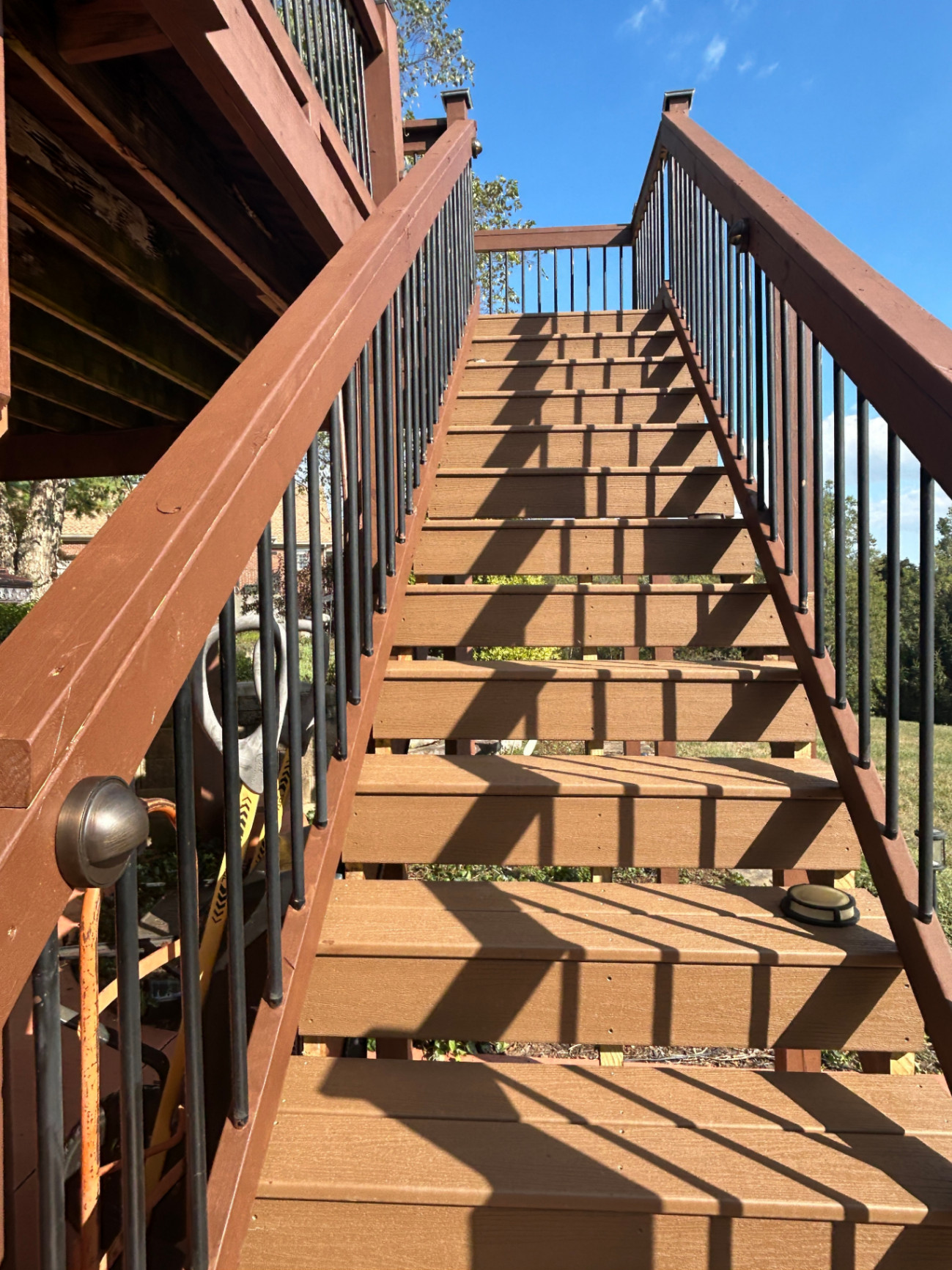
The goal is simple: your lighting should be invisible during the day. No exposed wires, no clunky boxes, no evidence that anything's there except maybe a small, tasteful fixture. When someone sees your stairs in daylight, they should just see stairs.
Okay, now for the fun part: the design decisions that actually make people stop and say "who did your lighting?"
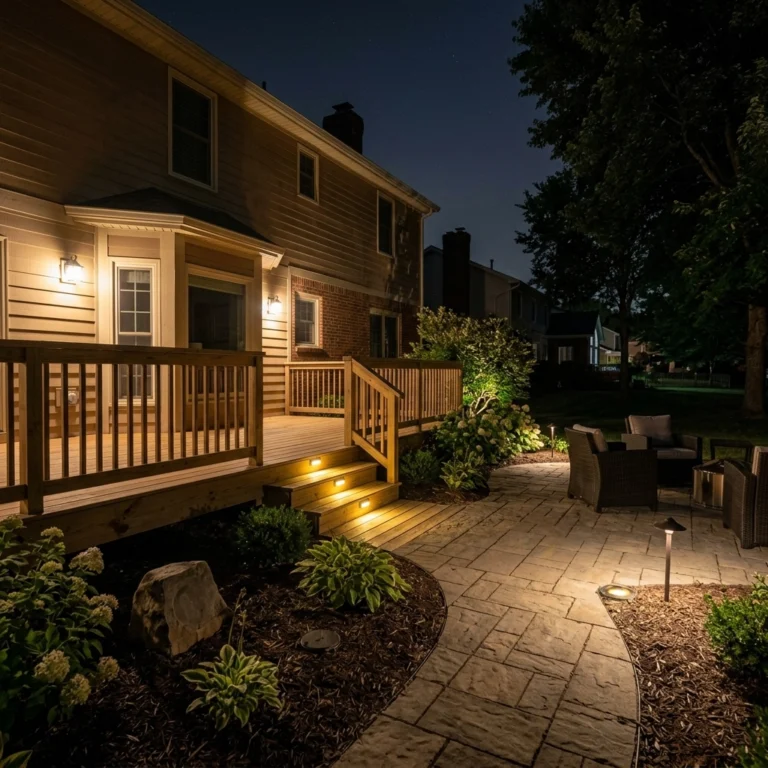
Direction and placement are everything. You want light on the step surface, not blasting up into people's faces. That means fixtures with shields or directional housings that throw light down and forward. When you're walking down stairs at night, the last thing you need is glare that temporarily blinds you. We typically install fixtures on the riser (the vertical part) or integrated into the handrail, positioned to create a soft pool of light on each tread.
Spacing creates rhythm. The standard guideline is one light per three steps, but honestly? That's just a starting point. It depends on your fixture output, step width, and the overall effect you're going for. For wider staircases, you might want fixtures on both sides. For dramatic effect, you might light every step. The key is creating a visual rhythm that guides the eye naturally down the path.
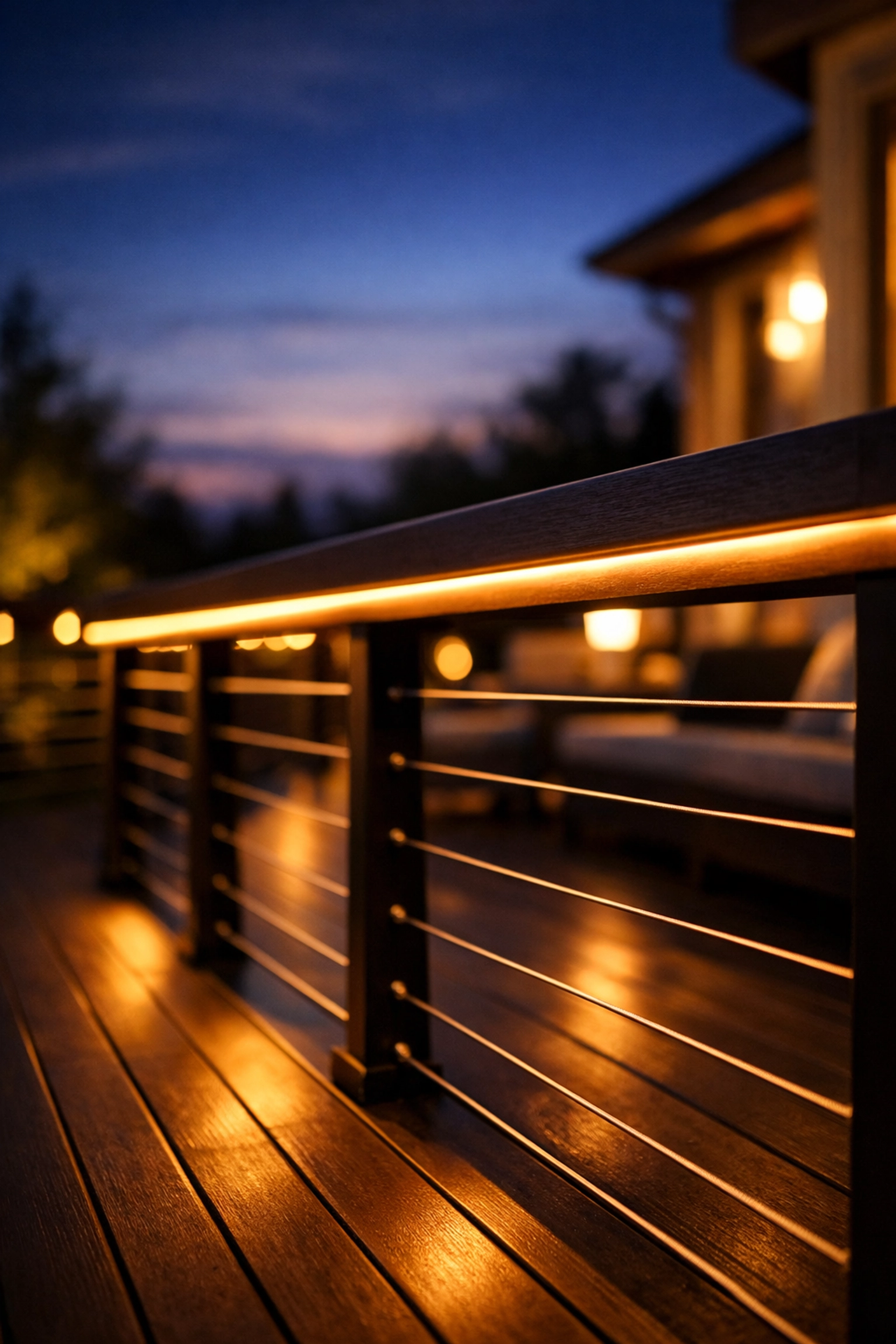
Color temperature sets the mood. This is where people either nail it or completely miss. Warm white (2700-3000K) feels inviting and residential: it's what you want for most homes. Cool white (4000K+) looks clinical and commercial. Unless you're lighting a modern art gallery, stick with warm. Your guests will thank you.
Here's a secret: the best deck and step lighting designs use multiple fixture types working together. It's like a well-composed photograph: you need different elements at different depths to create interest.
Post caps + step lights = instant elegance. When you combine soft post cap lights along your railing with focused step lights, you create layers. The post caps provide ambient glow and define the perimeter. The step lights provide task lighting and draw attention to the stairway itself. Together, they make even a basic deck look thoughtfully designed.
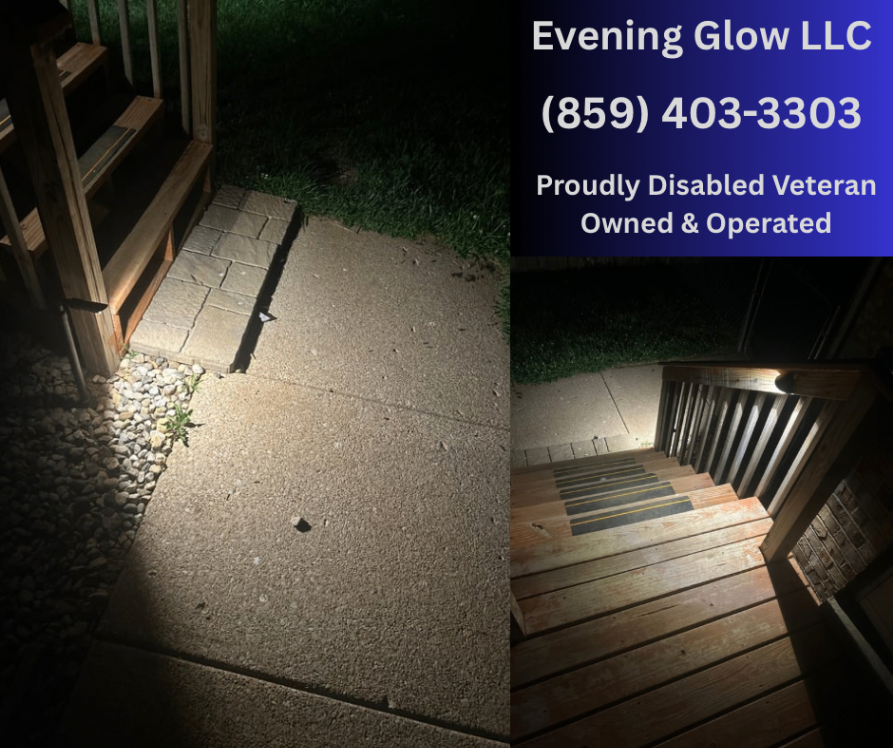
Under-rail lighting adds depth. If your railing has a cap or wide top rail, consider installing strip lighting or small puck lights underneath. It creates a floating effect that's subtle during the evening but really shines (literally) after dark.
In-deck fixtures for existing structures. Already have a deck and don't want to tear it apart? In-deck lights are your friend. They retrofit into existing boards with minimal disruption and provide the same safety benefits as purpose-built step lights.
Look, I've seen homeowners spend $50,000 on a new deck and then slap some $20 solar lights from the hardware store on the steps. It's like buying a Mercedes and putting bicycle tires on it. Those small lighting details aren't an afterthought: they're what makes the entire investment worthwhile.
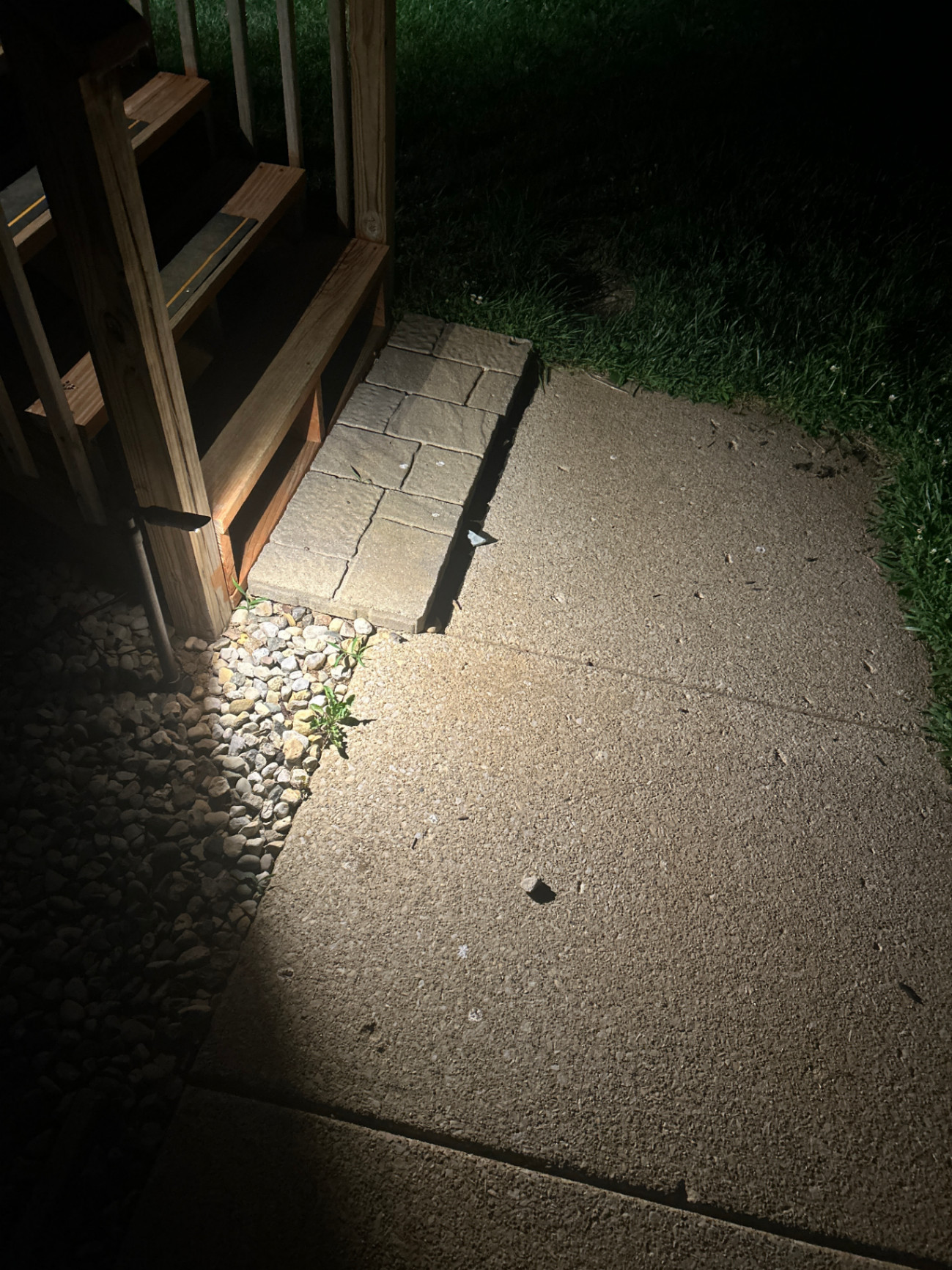
Proper step and deck lighting increases your home's value, extends your usable outdoor space into the evening hours, and dramatically improves safety for your family and guests. But beyond all that, it just feels better. There's something fundamentally satisfying about walking up to a well-lit entrance: it says someone cared enough to get the details right.
If you're in the Lexington area and thinking about adding step lighting to your deck or entryway, start by really looking at your space at night. Where are the dark spots? Where do you feel uncertain about your footing? Where would a little light make the architecture pop?
Modern LED fixtures use minimal energy, so you're not looking at a massive utility bill increase. Many of our clients are surprised to learn their entire deck lighting system costs less than $5 a month to run. And with proper installation: good trenching, GFCI protection, quality fixtures: you're looking at a system that'll last 15-20 years with minimal maintenance.
The difference between average outdoor lighting and lighting that makes people stop in their tracks really does come down to the details. The fixture placement, the wire management, the color temperature choices, the way everything works together as a system rather than a collection of random lights.
Want to see what's possible with your outdoor space? We'd love to show you. Check out more of our work at www.eveningglowllc.com or swing by our portfolio to see how small details create big transformations for homeowners throughout Central Kentucky.
Because at the end of the day, great lighting isn't about seeing everything( it's about seeing what matters, beautifully.)