Physical Address
304 North Cardinal St.
Dorchester Center, MA 02124
Physical Address
304 North Cardinal St.
Dorchester Center, MA 02124
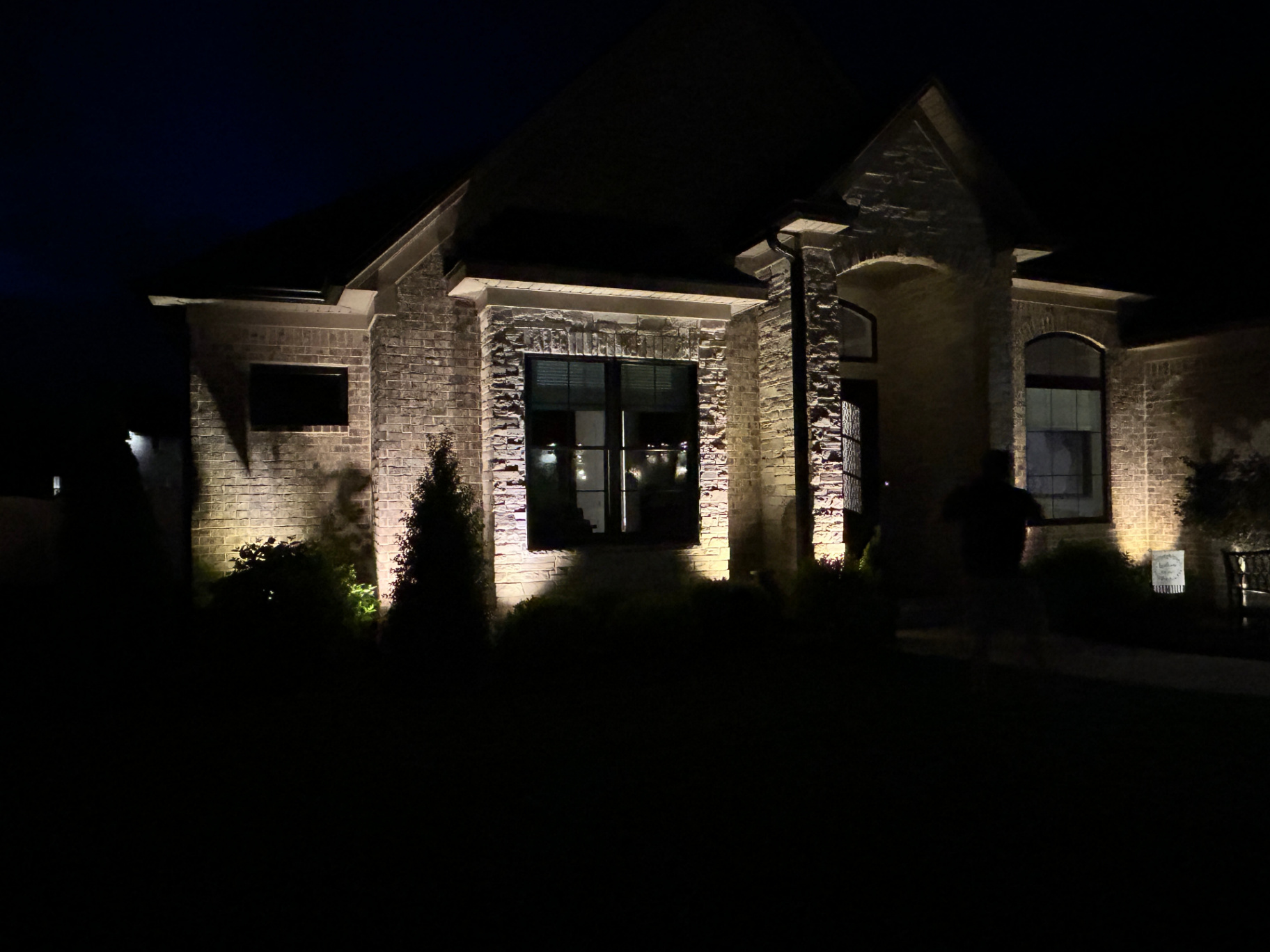
Estimated read time: 6 minutes
If you live in a brick or stone home here in Central Kentucky, you already know what makes these materials timeless: the depth, the texture, the way natural light plays across the surface during the day. But after the sun goes down? That's when most homes fade into the background, losing all that architectural character you invested in.
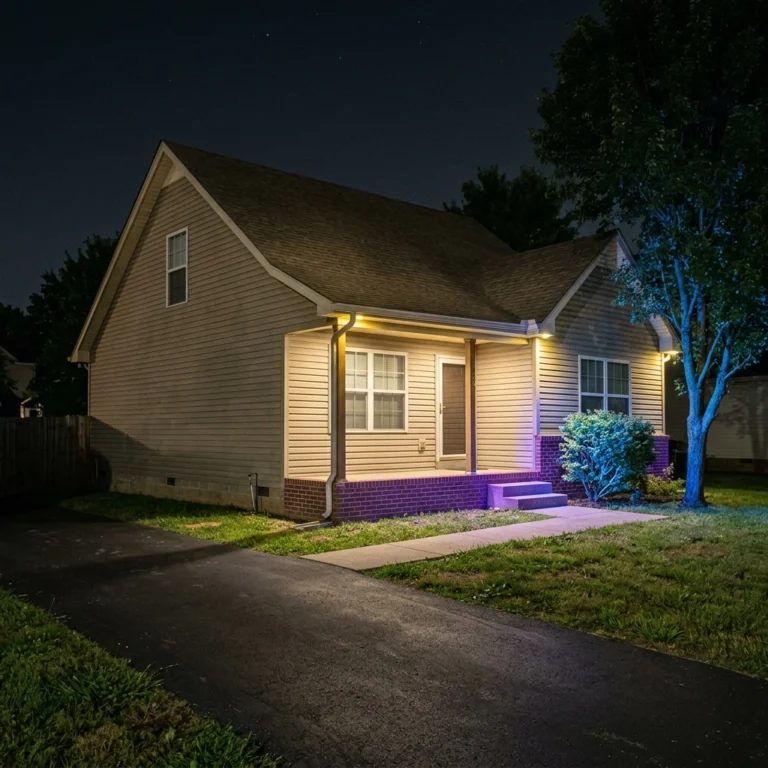
The right lighting changes that completely. Warm white, strategically placed fixtures can bring out every shadow line, every mortar joint, and every subtle variation in your façade: turning your home into something people actually stop and notice after dark.
Not all exterior materials respond to light the same way. Smooth siding reflects light evenly, but brick and stone? They're three-dimensional. Every joint, every edge, every surface variation creates shadow and depth: but only if you light them correctly.
Brick homes, especially the traditional styles common throughout Lexington and surrounding areas, have horizontal mortar lines that can either disappear or become a design feature depending on your lighting angle. Stone facades: whether stacked, natural, or veneered: have even more texture to work with. Miss the angle by a few degrees, and you flatten everything out. Get it right, and your home looks like it belongs in a design magazine.
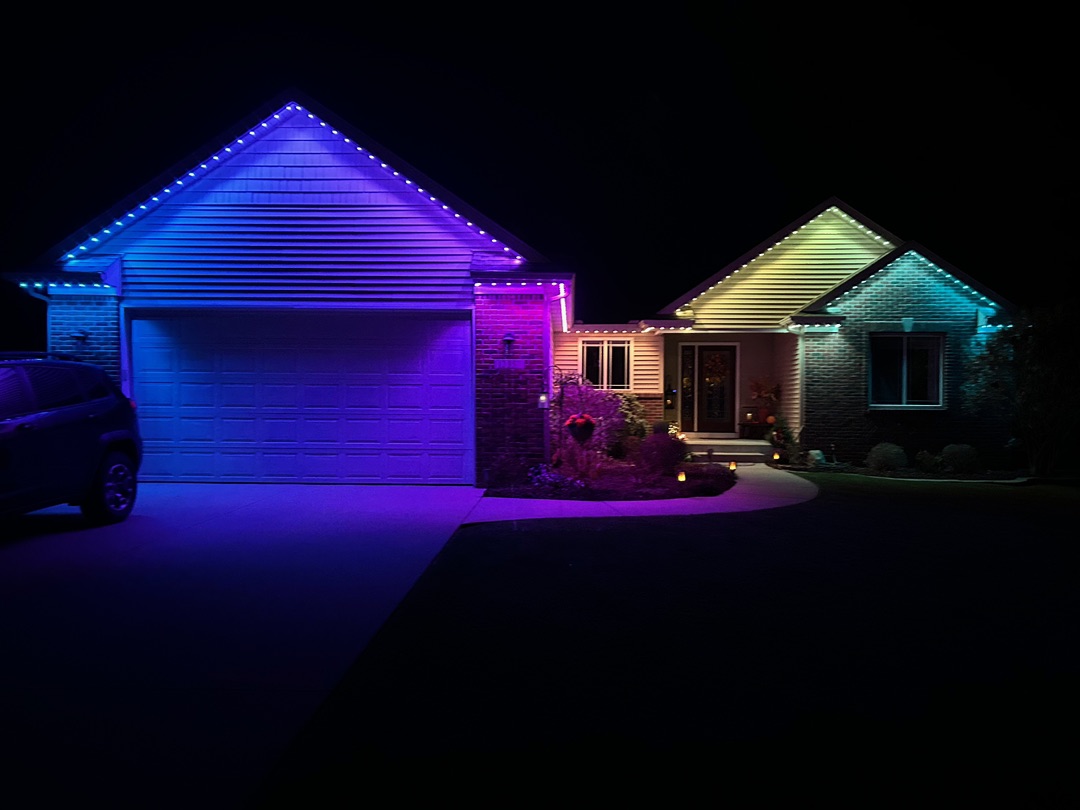
You've probably seen homes lit up in harsh, overly bright white that feels more like a commercial parking lot than a residence. That's typically a color temperature issue. Cool white (5000K+) washes out texture and creates glare. Warm white (2700K–3000K) mimics the glow of traditional outdoor lighting and brings out the natural warmth in brick and stone.
Here's what warm white does for textured facades:
Enhances natural tones. Brick ranges from deep red to tan to gray depending on the clay and firing process. Stone can be limestone, sandstone, river rock, or manufactured blends. Warm light complements all of them without distorting color.
Creates shadow definition. When light hits a textured surface at the right angle, it creates micro-shadows that define every edge. Warm white does this without the harshness of cooler temps.
Feels inviting. Cold, bright light signals "keep out." Warm light says "welcome home." It's a subtle psychological shift, but it makes a difference in curb appeal and how your home feels when you pull into the driveway.
Lighting brick or stone isn't about flooding the wall with light: it's about precision. You want fixtures placed low and angled upward (uplighting) or mounted high and angled downward (downlighting), depending on your goals.
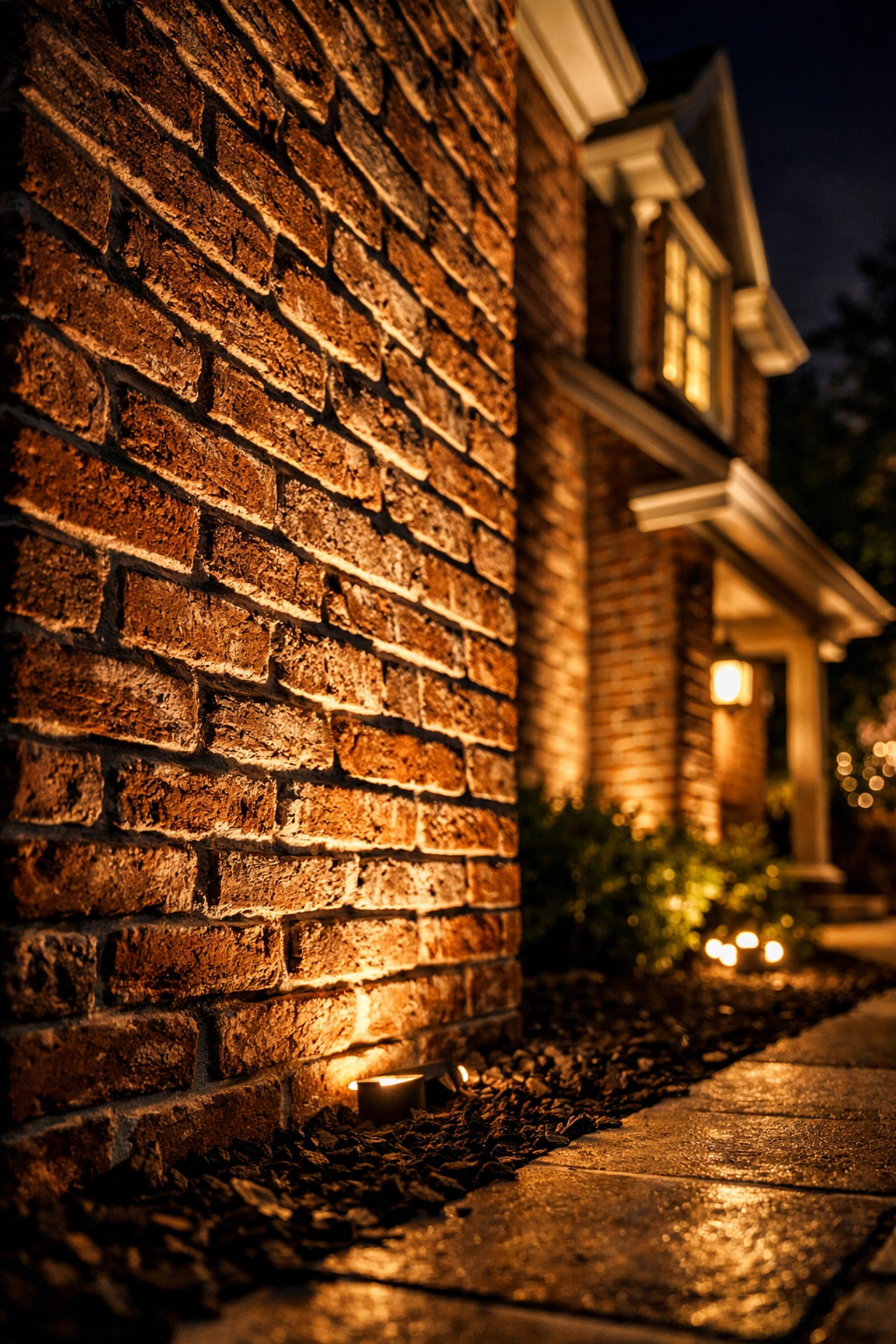
Uplighting from ground level is the most common approach. Fixtures installed near the foundation or tucked into landscaping beds cast light upward across the façade, emphasizing texture as the light travels. This works especially well on two-story homes or entryways where you want to draw the eye upward.
Downlighting from soffits or eaves creates a wall-washing effect, where light pools down the surface. This is ideal for highlighting stone columns, entryway features, or accent walls without ground-level fixtures that might interfere with foot traffic or landscaping maintenance.
Grazing vs. Washing. Grazing means placing the fixture close to the wall so light skims across the surface at a shallow angle: perfect for maximizing texture. Washing places the fixture farther out, creating even coverage with softer shadows: better for a more subtle effect.
If you're in Lexington, Nicholasville, Georgetown, or anywhere in the Bluegrass, you're dealing with a mix of traditional and modern architecture: but brick and stone dominate. From historic homes in Ashland Park to newer builds in Andover, the material is everywhere.
That also means you're working with:
Kentucky limestone accents. Native limestone shows up in foundations, columns, and decorative elements. It's lighter in color than most brick, so it catches and reflects light differently. You'll want to balance your warm white output so limestone doesn't overpower darker brick tones.
Seasonal landscaping changes. Hostas, boxwoods, and ornamental grasses are staples here, and they grow. A fixture that's perfectly aimed in April might be partially blocked by foliage in July. Plan for mature growth or choose adjustable fixtures that let you tweak angles as needed.
Weather durability. We get everything: humid summers, freeze-thaw cycles, ice storms. Your lighting system needs to handle it without corroding, shifting, or dimming. That's where low-voltage systems with sealed, outdoor-rated components make a difference.
One of the biggest concerns homeowners have about adding lighting to their façade is visibility: not at night, but during the day. Nobody wants a bunch of clunky black fixtures stuck to their brick like an afterthought.
Modern low-voltage systems solve this. Fixtures are small, often powder-coated to blend with surroundings, and installed in locations where they tuck into landscaping, sit flush against foundation trim, or mount discreetly under eaves. Wiring runs through mulch beds or behind architectural features, so there's nothing visible unless you're specifically looking for it.
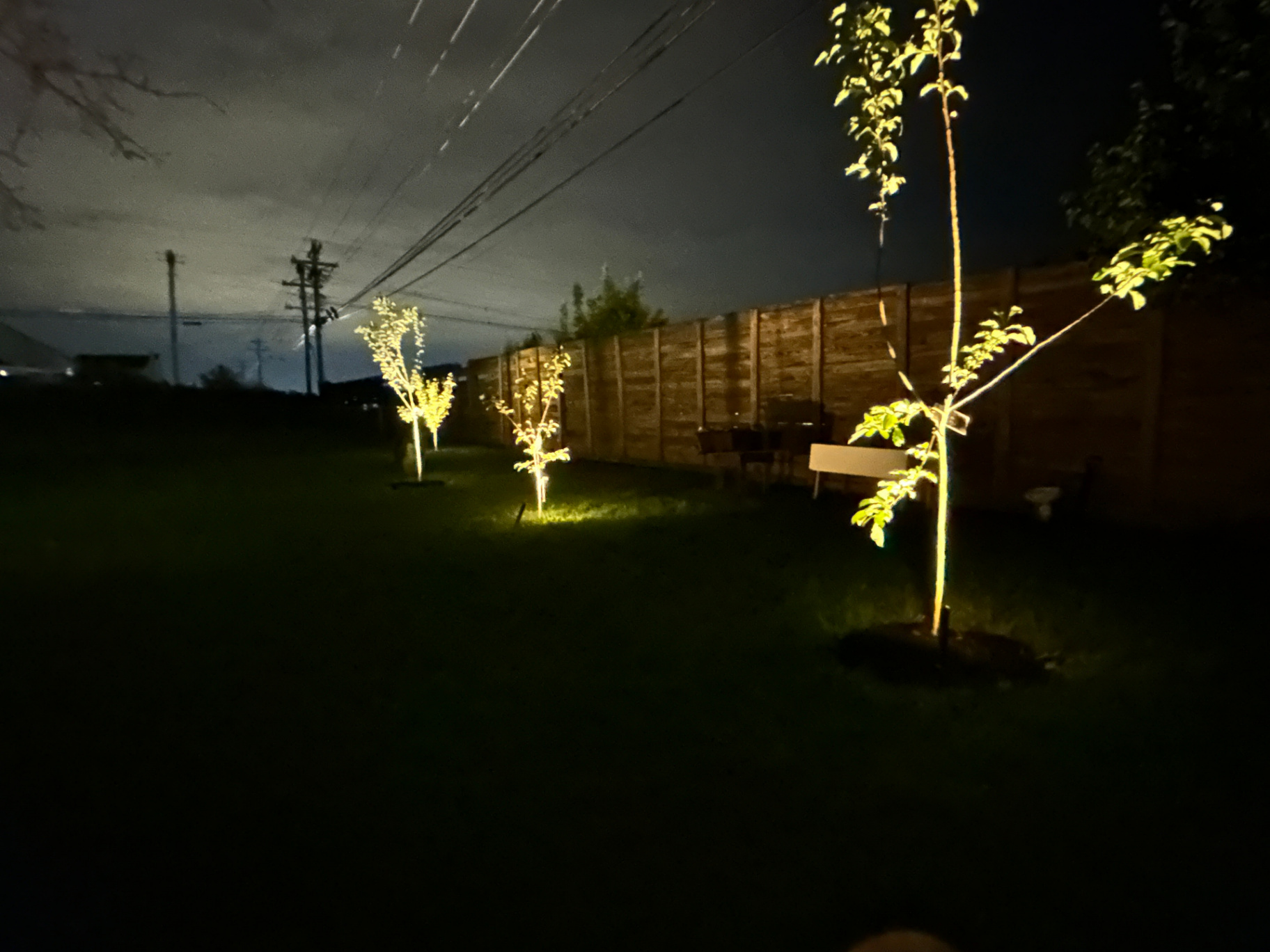
The result? By day, your home looks exactly as it always has. By night, it transforms.
Brick and stone lighting doesn't exist in a vacuum: it works alongside your landscaping, walkways, and architectural details. The best designs layer light across multiple elements to create a cohesive look.
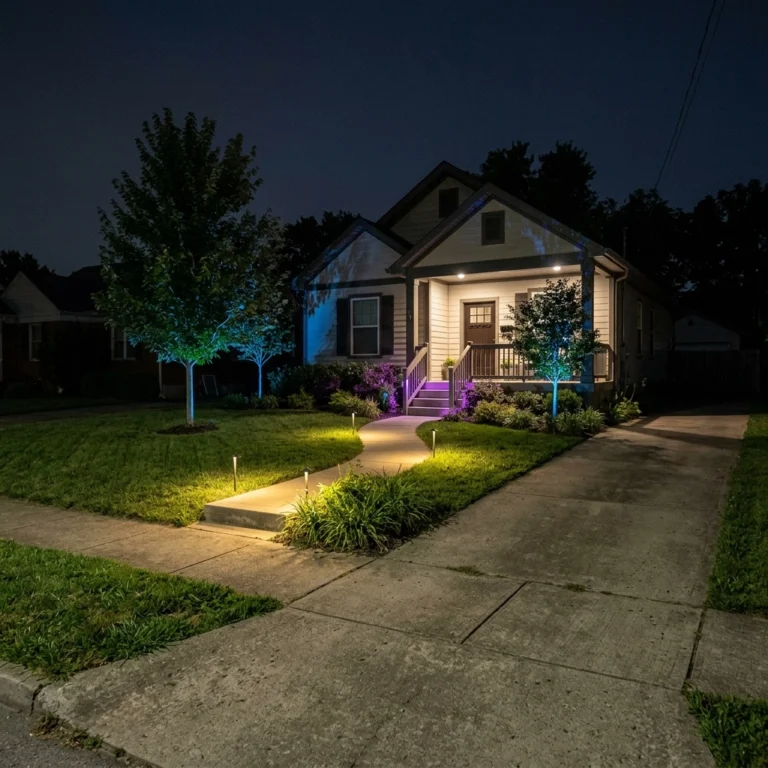
Coordinate with tree and shrub uplighting. If you're already lighting mature trees or foundation plantings, your façade lighting should balance: not compete. Aim for similar color temperatures and intensity levels so everything feels intentional.
Highlight entry columns and stonework. If your home has stone pillars, a brick archway, or decorative masonry around the front door, those are natural focal points. Add dedicated fixtures to frame the entry and create a welcoming path from driveway to door.
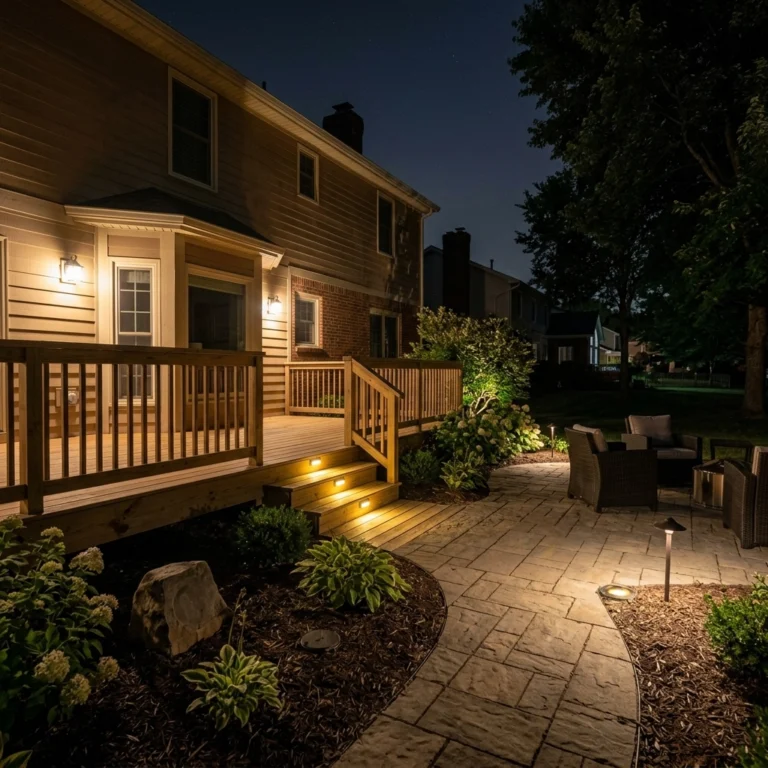
Integrate pathway and step lighting. Safety matters, but so does design. Low-voltage path lights and recessed step lights tie your façade lighting into a complete outdoor lighting system that's both functional and beautiful.
Here's something most lighting companies won't tell you: exterior lighting takes a beating. Sun exposure, moisture, temperature swings, and physical wear mean that even "outdoor rated" fixtures can fail within a few years.
That's why we back every installation with a Lifetime Warranty: not just on the fixtures, but on the entire system. If a component fails, if wiring corrodes, if a transformer gives out, we handle it. No hidden fees, no "that's not covered" excuses. You invest once, and the system works for as long as you own your home.
For brick and stone lighting specifically, this matters even more. Fixtures mounted against masonry experience more vibration, moisture wicking, and thermal expansion than those in open air. A warranty that covers real-world conditions gives you peace of mind that your investment is protected.
If you're ready to see what your brick or stone home looks like with professional lighting, the process is straightforward. We start with a site consultation: walking your property, identifying architectural features, and mapping out a lighting plan that fits your goals and budget.
From there, installation typically takes a day or two depending on the size of your home and the complexity of the design. Everything is low-voltage, so it's energy-efficient and safe. And because the system is modular, you can expand it over time: adding landscape lighting, pathway lights, or even outdoor audio as your needs evolve.
Want to see examples of completed projects in Central Kentucky? Check out our portfolio or reach out directly at www.eveningglowllc.com. We'll walk you through options, answer questions, and give you a clear picture of what's possible for your home.
Your brick and stone deserve to be seen after dark. Let's make it happen.