Physical Address
304 North Cardinal St.
Dorchester Center, MA 02124
Physical Address
304 North Cardinal St.
Dorchester Center, MA 02124
Time to read: ~7 minutes
If you want outdoor lighting that looks high-end, feels safer at night, and doesn’t glare your neighbors (or get you in trouble with local rules), focus on three things: a real lighting plan, warm/controlled light output, and fixtures installed to disappear in daylight.
Transform your results by deciding where you need light to do work and where you want light to create drama. You’ll avoid the common Central KY mistake: too many fixtures in the wrong places.
Build your nighttime map in 10 minutes:
Your goal: layered light that looks natural, never “stadium bright.”
Soft help if you want it: our design-first approach is outlined at www.eveningglowllc.com.
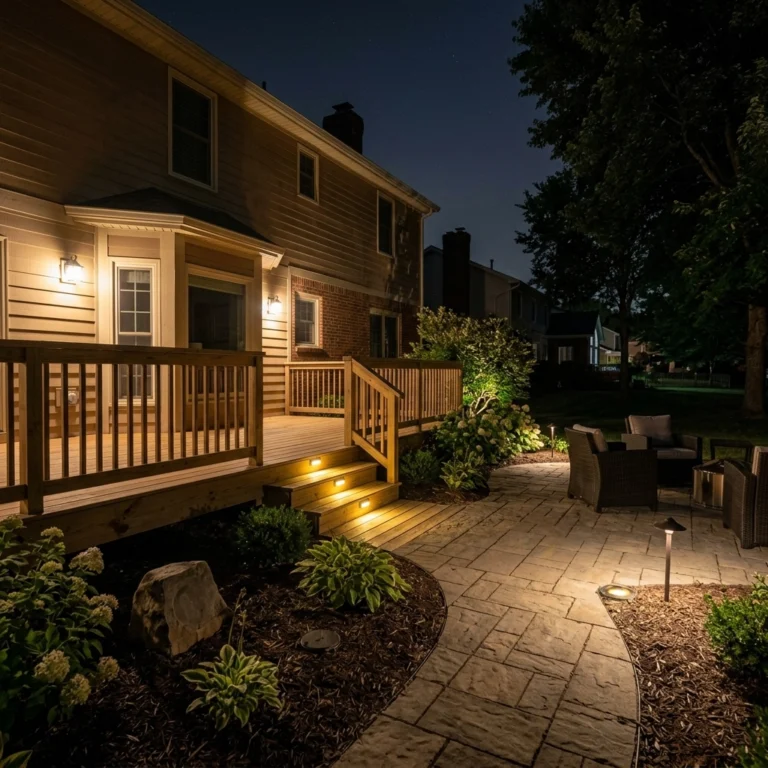
Create instant polish by lighting the places your feet go and your hands reach. You’ll feel the difference the first night.
Priority checklist (in order):
![[Residential Walkway Lighting Installation]](https://cdn.marblism.com/7ZDMHWN0QiX.JPG "The Best Central KY Outdoor Lighting Advice You’ll Ever Get (From a Local Vet)")
Quick pro tip: Use more fixtures at lower output instead of fewer bright ones, because even light reads expensive and reduces harsh shadows.
If your home has stairs or tricky grade changes, step-focused lighting is one of the highest ROI upgrades you can make.
Master the “right” look in Lexington by keeping color temperature warm and output controlled. It flatters brick, stone, and mature landscaping, basically the Central KY aesthetic.
What to aim for:
Local regulation note (Lexington-Fayette):
Regulations can be nuanced by location and use, so treat this as guidance, not legal advice, but it’s exactly why a pro plan matters.
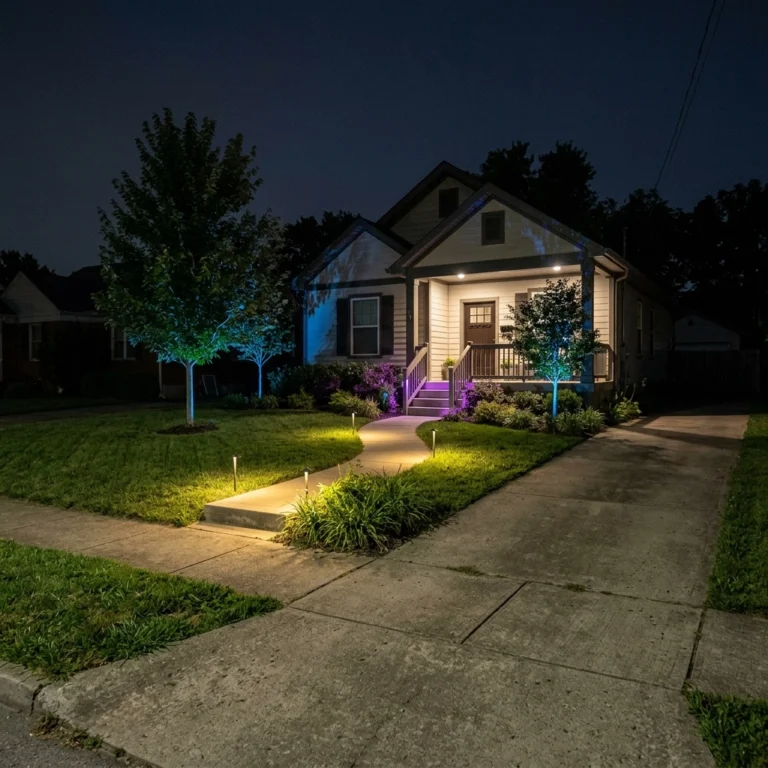
Highlighting the right features at night starts with hiding the system during the day. You want visitors saying “Wow,” not “Where are all those lights coming from?”
Make your lighting disappear with:
![[Low-voltage backyard uplights]](https://cdn.marblism.com/ECVB8Mgmijv.JPG "The Best Central KY Outdoor Lighting Advice You’ll Ever Get (From a Local Vet)")
Vet-style discipline: Small details win, straight trenches, clean connections, and consistent aiming give you that “magazine yard” look without the clutter.
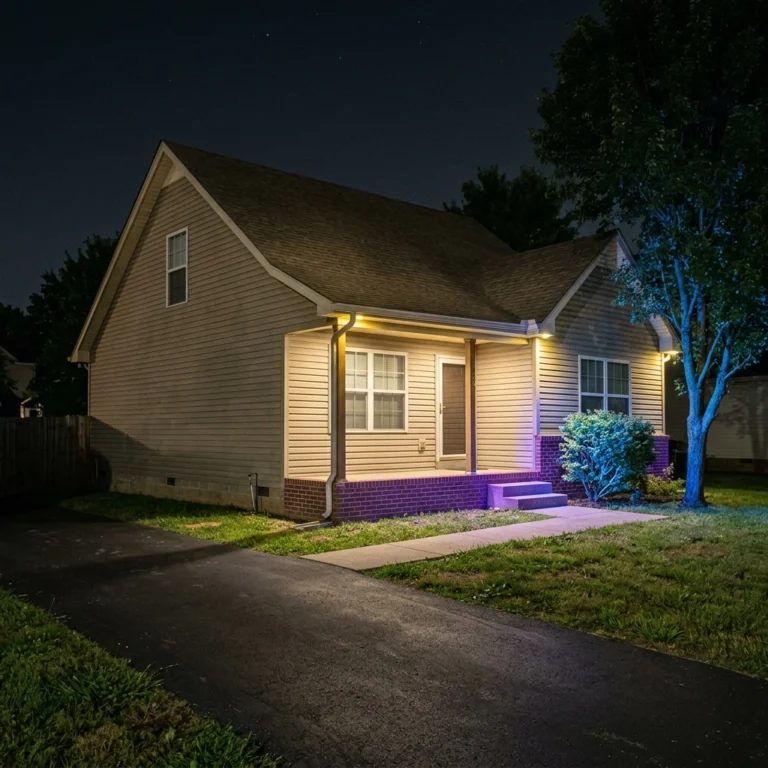
Create depth by mixing layers instead of leaning on one fixture type. When you only use path lights, everything looks flat; when you only uplight, everything looks spooky.
The three layers (simple and effective):
![[Warm white, low-voltage architectural lighting]](https://cdn.marblism.com/-CDmWfcjHpO.JPG "The Best Central KY Outdoor Lighting Advice You’ll Ever Get (From a Local Vet)")
Rule of thumb: If you can’t describe what each light is doing (“this guides,” “this highlights,” “this frames”), you’ll end up with extra fixtures and less impact.
Want to see the difference between landscape vs. architectural approaches? Start here: https://eveningglowllc.com/services
Transform your yard by lighting trees like a cinematographer, not a parking lot manager. The best tree lighting in Central KY looks calm and natural, especially with big canopies common around Lexington neighborhoods.
Do this instead:
Bonus move: Add subtle downlighting (“moonlighting”) when the structure allows, because it creates sparkle on lawns and patios without harsh glare.
Master reliability by using quality low-voltage LED lighting with a transformer sized for your plan. You’ll get better efficiency, safer installation, and easier expansion later.
What you want in your system:
Real-world Central KY note: Our clay soil and seasonal moisture swings punish cheap connectors, so the “budget system” often becomes the expensive system after the first few failures.
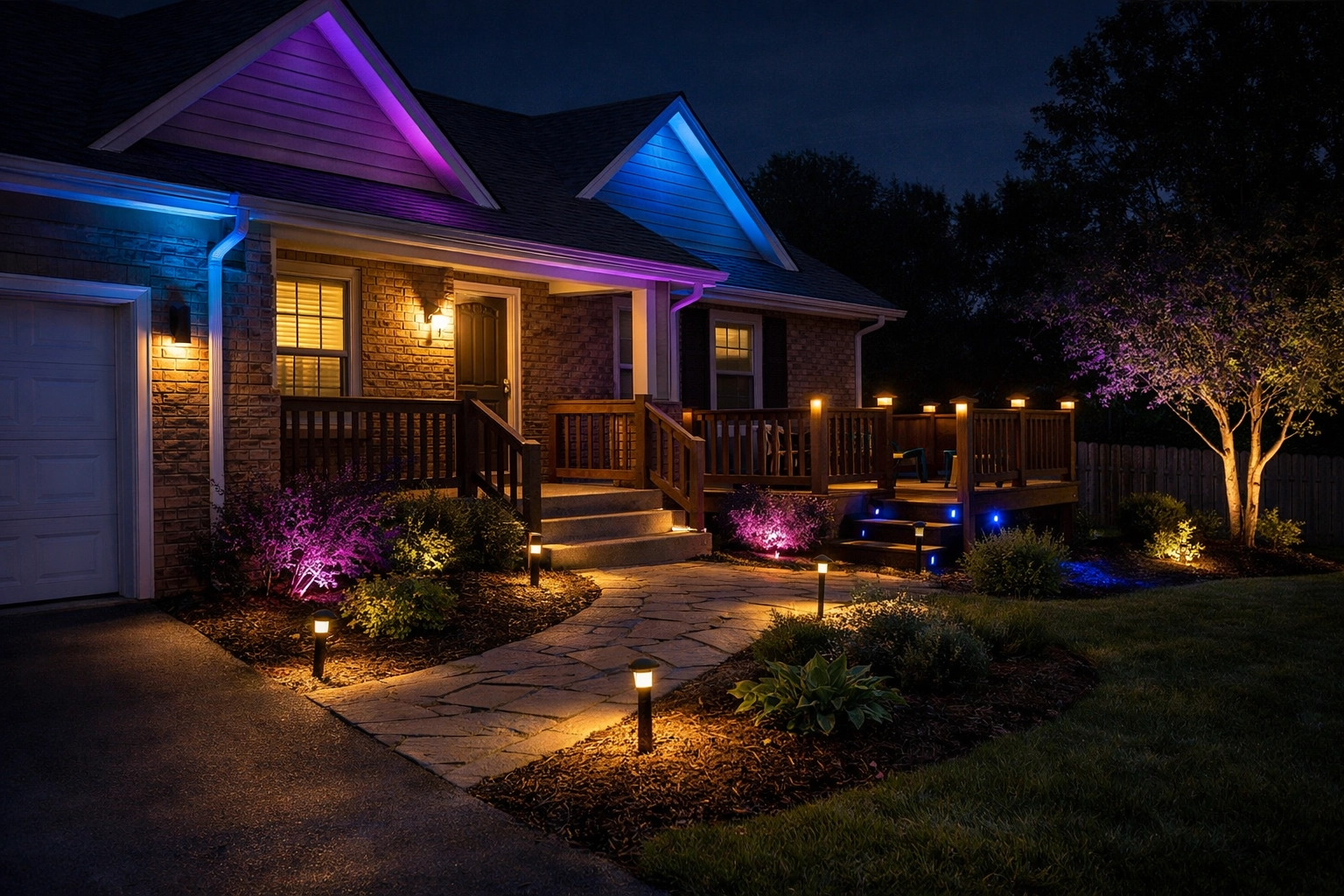
Create holiday-level impact without climbing ladders by installing permanent roofline lighting that stays clean and discreet. You get everyday warm white plus color scenes for UK game days, Derby parties, Halloween, and Christmas, without a single temporary clip.
![[Permanent Architectural Track Lighting System]](https://cdn.marblism.com/eGWlNSG06VJ.jpeg "The Best Central KY Outdoor Lighting Advice You’ll Ever Get (From a Local Vet)")
Keep it tasteful by default:
If you’re curious about this category, explore: https://eveningglowllc.com/services/permanent-architectural-lighting
Transform your patio nights by pairing lighting with outdoor audio that’s balanced, not booming. You’ll get “restaurant vibe” at home, clear sound coverage with no hot spots.
A solid outdoor audio plan does this:
If your backyard is already a hangout spot, outdoor audio is the upgrade that makes it feel finished: https://eveningglowllc.com/services/outdoor-audio
Keep your lighting looking perfect by planning for adjustments and cleanups. Plants grow, mulch shifts, and winter freeze-thaw can nudge fixtures out of alignment.
Simple maintenance schedule:
Two “you’ll thank yourself later” moves:
If you want ongoing tune-ups, that’s exactly what maintenance programs are for: https://eveningglowllc.com/services/maintenance
Do:
Don’t:
Plan for coverage, not a fixture count; most homes land in the 12–30 fixture range depending on lot size, mature trees, and how many zones you want.
Create safety with uniform, glare-free light, because harsh brightness can reduce visibility by creating deep shadows and eye strain.
Keep it subtle with warm white, shielding, and dimming, then set scenes so late-night hours run at a lower level.
Yes: default to warm white, then use color scenes selectively for events and holidays, especially with permanent architectural systems.
Use low-profile fixtures, smart placement, and clean wire management, because “invisible-by-day” is mostly design discipline, not magic.
You’ll get the best results when your system is designed for your property, installed cleanly, and supported long-term. If you want help mapping your zones, choosing warm/controlled output, or building an invisible-by-day system that holds up to Kentucky weather, start here: www.eveningglowllc.com.