Physical Address
304 North Cardinal St.
Dorchester Center, MA 02124
Physical Address
304 North Cardinal St.
Dorchester Center, MA 02124
6 min read
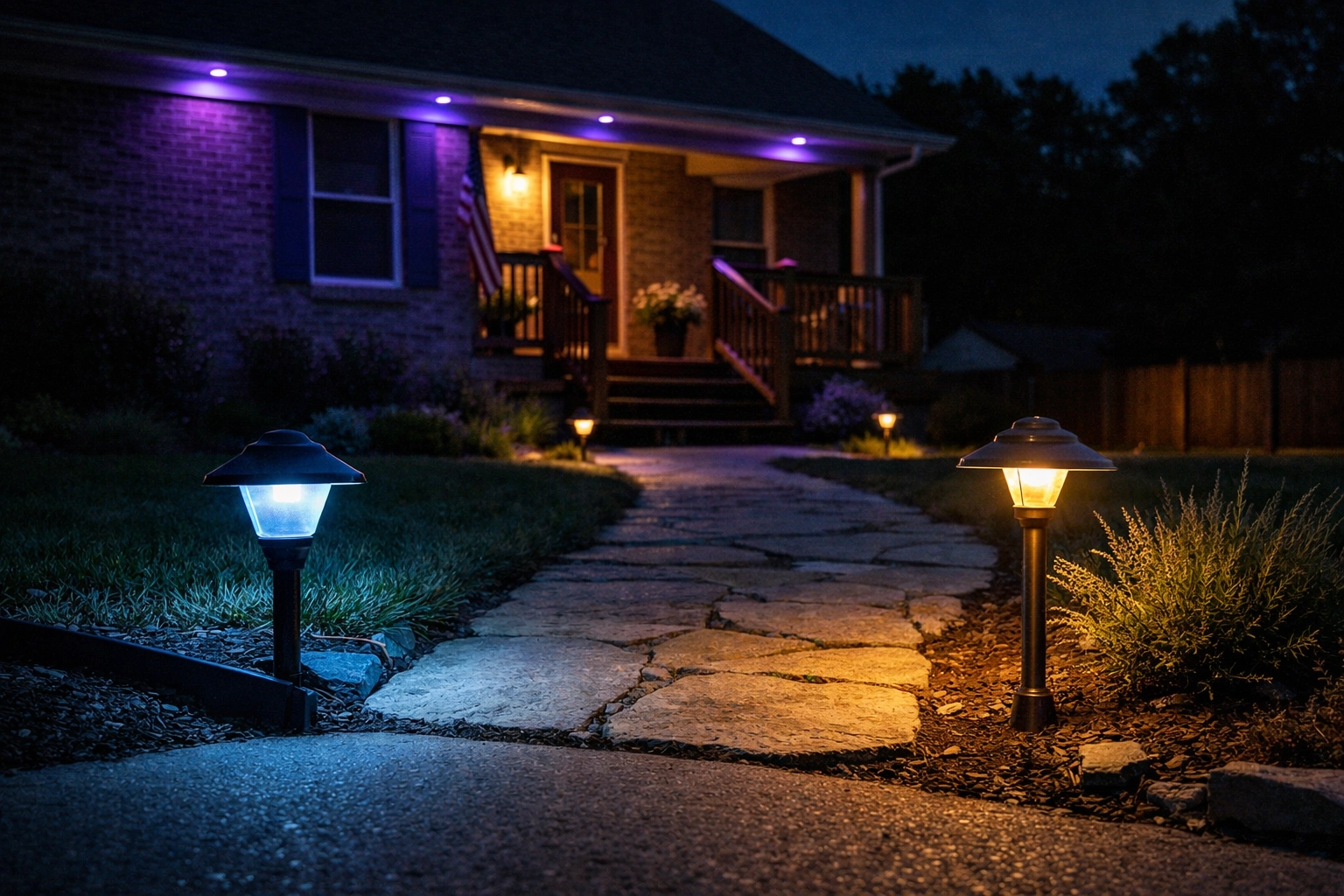
I'll keep this short: if you're still buying pathway lights from Lowe's every spring because last year's batch cracked, faded, or just quit working, you're throwing money away. I've pulled enough failed plastic fixtures out of Lexington yards to know the pattern cold.
Here's the thing most homeowners don't realize until they've replaced the same lights three years running: material matters. Not in some abstract "quality over quantity" way, but in a very real "will this survive Kentucky clay and a July thunderstorm" way.
Walk into any home improvement store, and you'll see the same lineup: $8.99 solar stake lights, $15 plastic path fixtures, maybe some composite-housing spotlights for $22 if you want to get fancy. The packaging looks great. The marketing promises "weather-resistant" and "maintenance-free." And for the first three months, they actually work pretty well.
Then reality hits.
The clear plastic around the bulb starts yellowing. The stakes crack when you try to adjust them. The solar panels stop charging because moisture got inside the housing. By year two, you're back at the store buying replacements, telling yourself maybe this batch will last longer.
It won't.
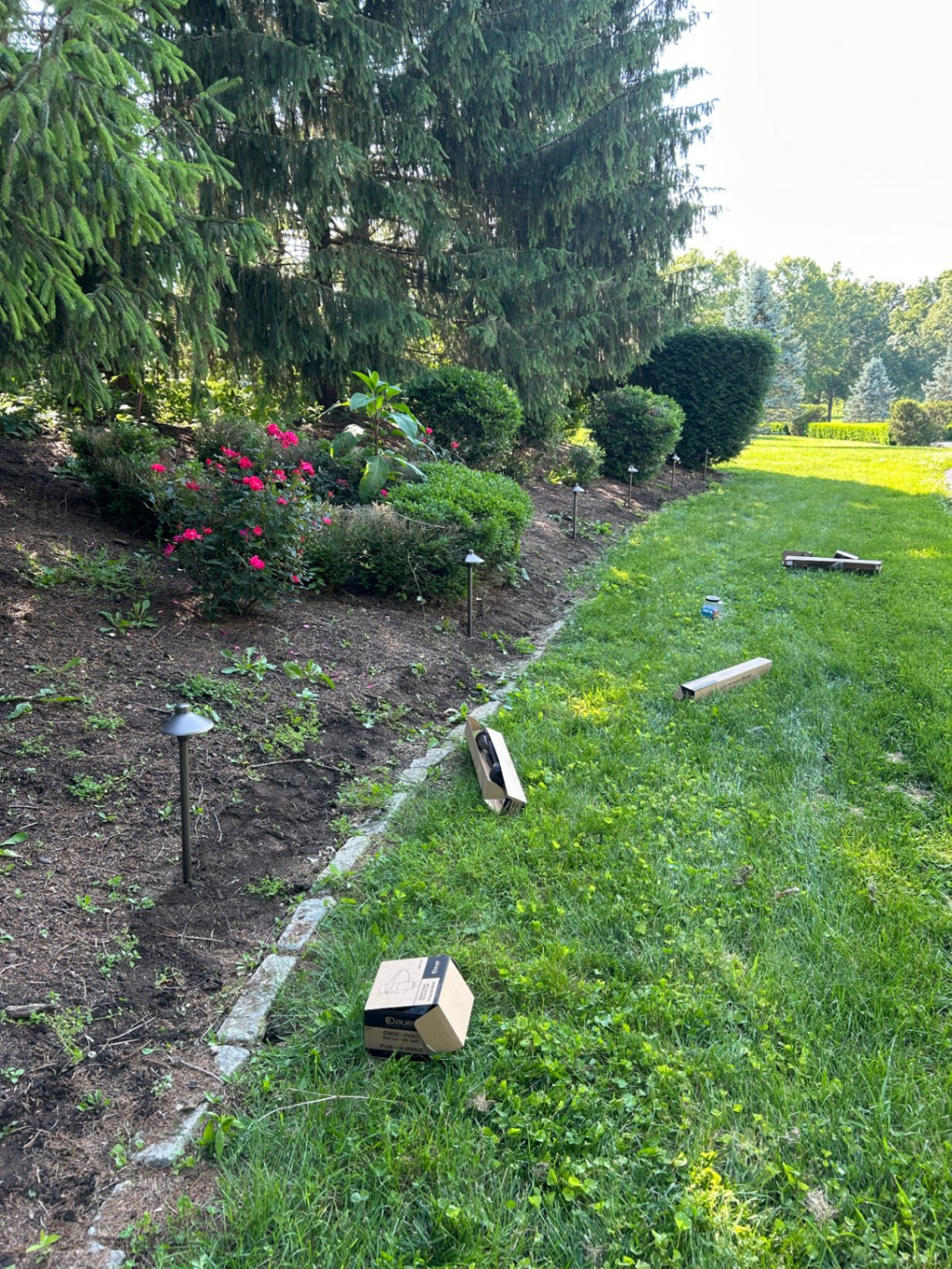
Let me get specific about why plastic fixtures struggle here in Lexington. Our soil isn't forgiving. That Kentucky clay everyone complains about when digging fence posts? It shifts, contracts, and expands with temperature swings. Plastic stakes that felt solid in April are loose by August and snapped by December.
The freeze-thaw cycle we get: mild winters with random hard freezes: absolutely destroys composite materials. Plastic becomes brittle when cold. One good frost, and those stakes you hammered in crack at ground level. Water seeps into the housing through hairline fractures you can't even see.
Add in our summer humidity and those afternoon storms that roll through Beaumont and Hamburg, and you've got a recipe for fixture failure. Moisture gets trapped inside plastic housings. Electrical connections corrode. The "weather-resistant" gaskets that cost the manufacturer 11 cents dry out and fail.
Here's what typically happens within three years:
Brass isn't just "nicer." It's fundamentally different material science. Brass is a copper-zinc alloy that reacts to outdoor conditions by getting stronger, not weaker. When brass oxidizes, it forms a protective patina: that greenish layer you see on old fixtures. That patina actually shields the metal underneath from further corrosion.
Contrast that with plastic, which just degrades.
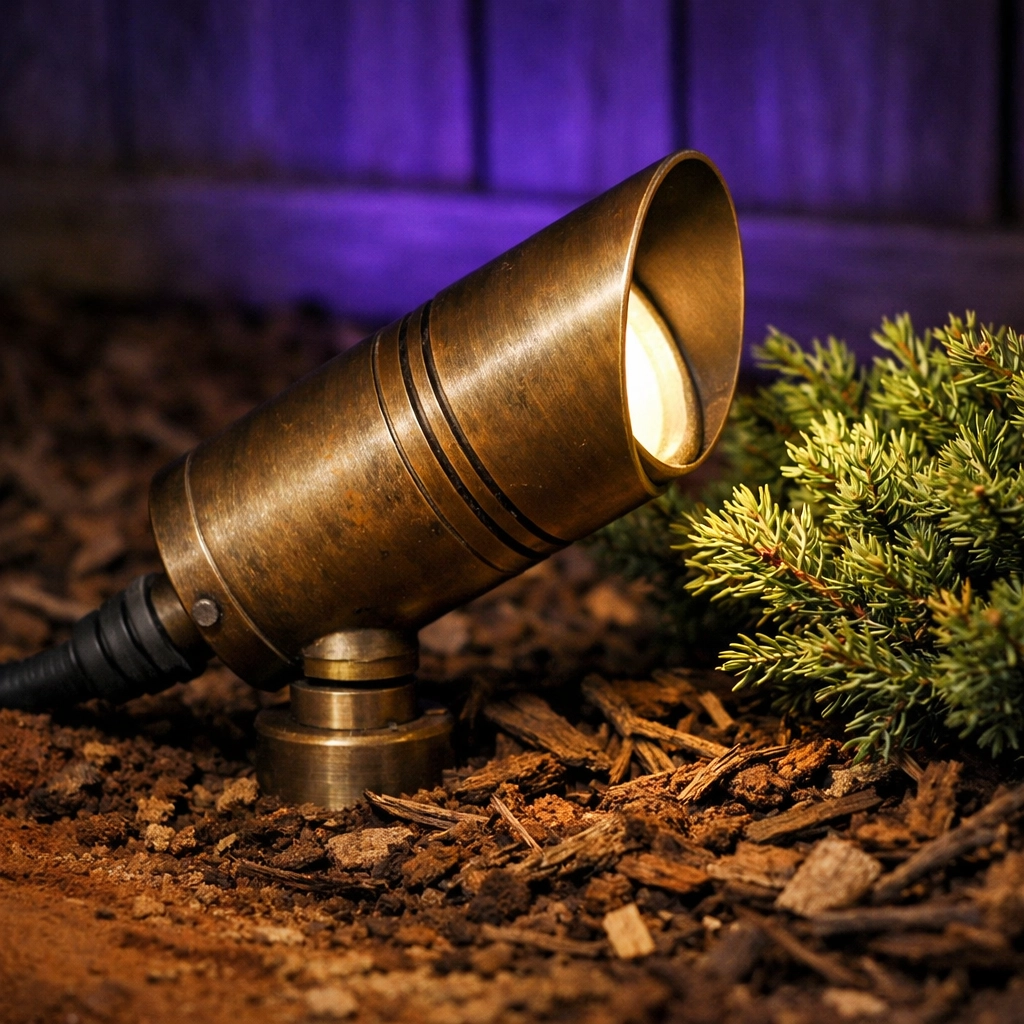
Real brass fixtures: the kind you get when you step up from big-box housings to true professional-grade hardware (here’s a helpful resource on what that looks like: www.eveningglowllc.com): won't rust, crack, chip, peel, or break. They handle freeze-thaw cycles without stress fractures. They don't care about Kentucky clay pushing them around.
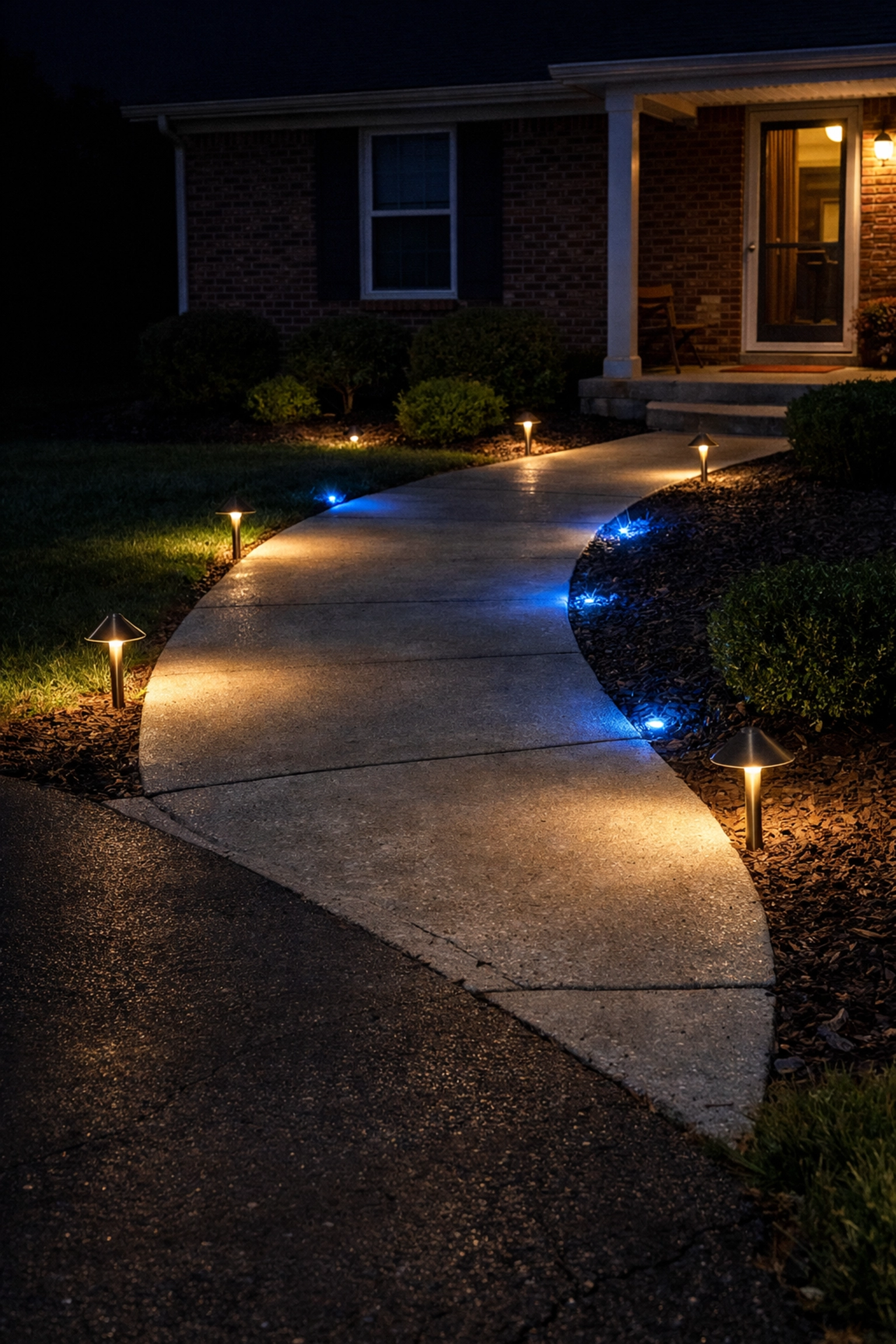
The stakes and housings we use are solid brass or marine-grade copper. When we drive them into the ground along someone's walkway in Hartland or Andover, they're staying put. No plastic tabs to snap. No composite material to degrade. Just dense metal that handles whatever Central Kentucky weather throws at it.
And here's the part that matters for actual light output: brass fixtures maintain their optical clarity. There's no plastic lens to yellow and cut your lumens. The light you installed in February 2026 looks the same in February 2036.
Let's run the actual math on a typical Lexington property: say, a walkway with 8 path lights from the driveway to the front door.
Big Box Store Route:
Professional Low-Voltage Brass System:
The brass system costs more upfront, absolutely. But that $850 buys you fixtures that last 15-20 years minimum, LED bulbs that run 50,000 hours, and a transformer that handles expansion when you want to add more lights later.
More importantly, you're done. You're not making annual trips to the store. You're not dealing with lights that randomly quit working before your daughter's graduation party. You're not crawling around in the dark with a flashlight trying to figure out which fixture died this time.
I learned this phrase in the military, and it applies perfectly to outdoor lighting. Spend the money once on the right equipment, and you never have to think about it again. Buy cheap, and you'll keep bleeding money on replacements, repairs, and do-overs.
Here's how we approach every installation in Lexington:
We use brass or copper fixtures exclusively. Not brass-plated. Not "brass finish." Solid brass that weighs what it should and handles like the tool it is. The kind of fixture where you can feel the quality before it's even in the ground.
We bury wire properly: 14/2 or 12/2 low-voltage cable rated for direct burial, not the thin stuff that comes with big box kits. We use gel-filled wire connectors that keep moisture out for decades. Every connection point is built to last longer than your mortgage.
The transformers we install aren't cheap plug-in boxes hiding behind your bushes. They're commercial-grade units with digital timers, photocells, and enough capacity to handle your whole property. When you want to expand the system in five years to light that new patio, you've got the headroom to do it.
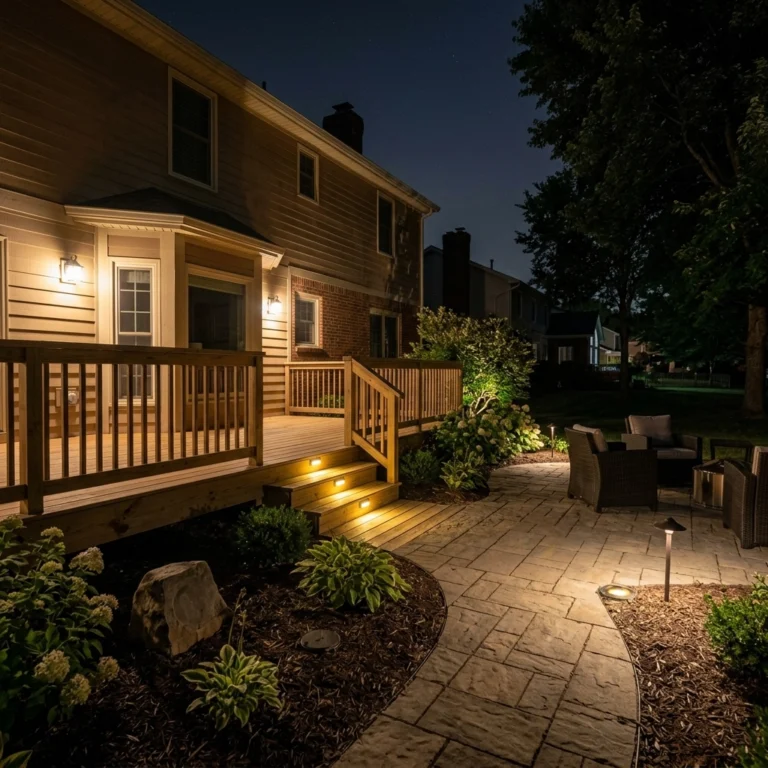
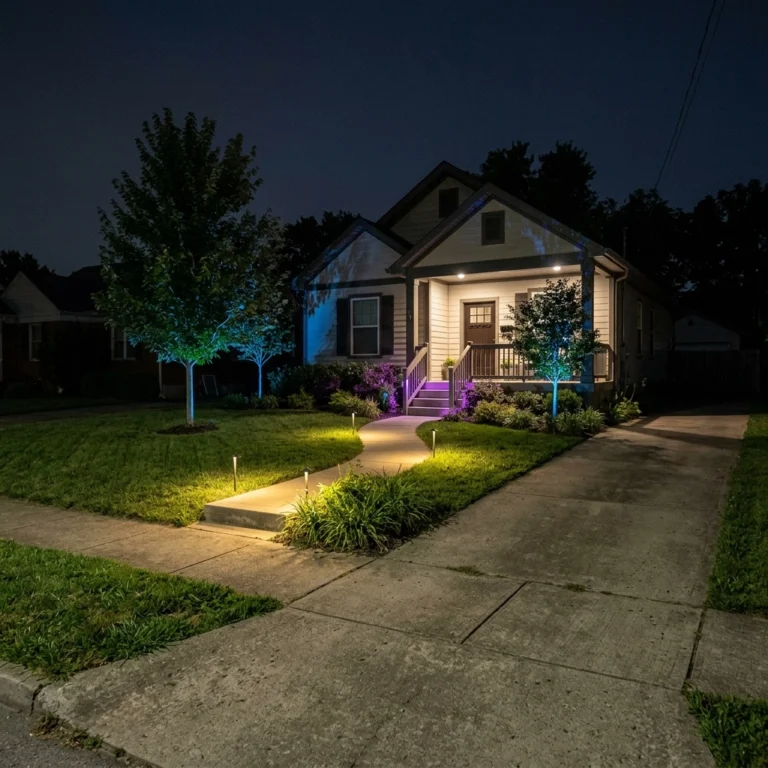
When we install a lighting system at a home in Liberty Road or Tates Creek, the fixtures become permanent infrastructure. They're not seasonal decorations you put up and take down. They're not temporary solutions you plan to replace. They're built into your property's landscape the same way your HVAC system is built into your home.
That permanence changes how you think about outdoor lighting. Instead of "will these last through fall," you're planning lighting zones, adjusting colors seasonally through app control, and actually using your outdoor spaces after dark because the lighting just works.
The property value impact is real too. Buyers in Lexington recognize professional lighting. They see brass fixtures and buried cable and know they're not inheriting someone's abandoned solar light graveyard. They see a finished outdoor space that functions at night, not just during showings.
If you've been stuck in the big box replacement cycle, here's what switching to professional brass fixtures looks like:
We come out, assess your property, and design a system that actually fits your space. Not a generic "8 lights along the walk" plan, but custom placement based on tree locations, grade changes, and how you actually use your yard. We talk about what you need lit and what should stay dark.
Installation usually takes a day for a typical residential system. We bury cable, set fixtures, dial in beam angles, and program the transformer before we leave. Everything's tested and working. The warranty is real: fixtures, transformers, and installation.
Then you're done. You've got lighting that works every night without thinking about it. No batteries to change, no solar panels to clean, no plastic stakes cracking in the cold.
I'm not going to tell you brass fixtures are cheap. They're not. But they're honest. You pay once for equipment that lasts decades instead of paying repeatedly for plastic that fails predictably.
For what most Lexington homeowners spend replacing big box store lights over five years, they could have installed a professional system that's still running strong when they sell the house.
That's the real cost of plastic: not just the purchase price, but the time, frustration, and recurring expense of dealing with equipment that was never built to last.
If you're tired of replacing the same lights every couple years, let's talk about a permanent solution. Real fixtures, buried cable, proper transformers: the kind of system you install once and stop thinking about.
That's the difference between plastic and brass. One is a temporary fix. The other is permanent infrastructure.
And in Kentucky clay, you want permanent.