Physical Address
304 North Cardinal St.
Dorchester Center, MA 02124
Physical Address
304 North Cardinal St.
Dorchester Center, MA 02124
Read time: 4 minutes
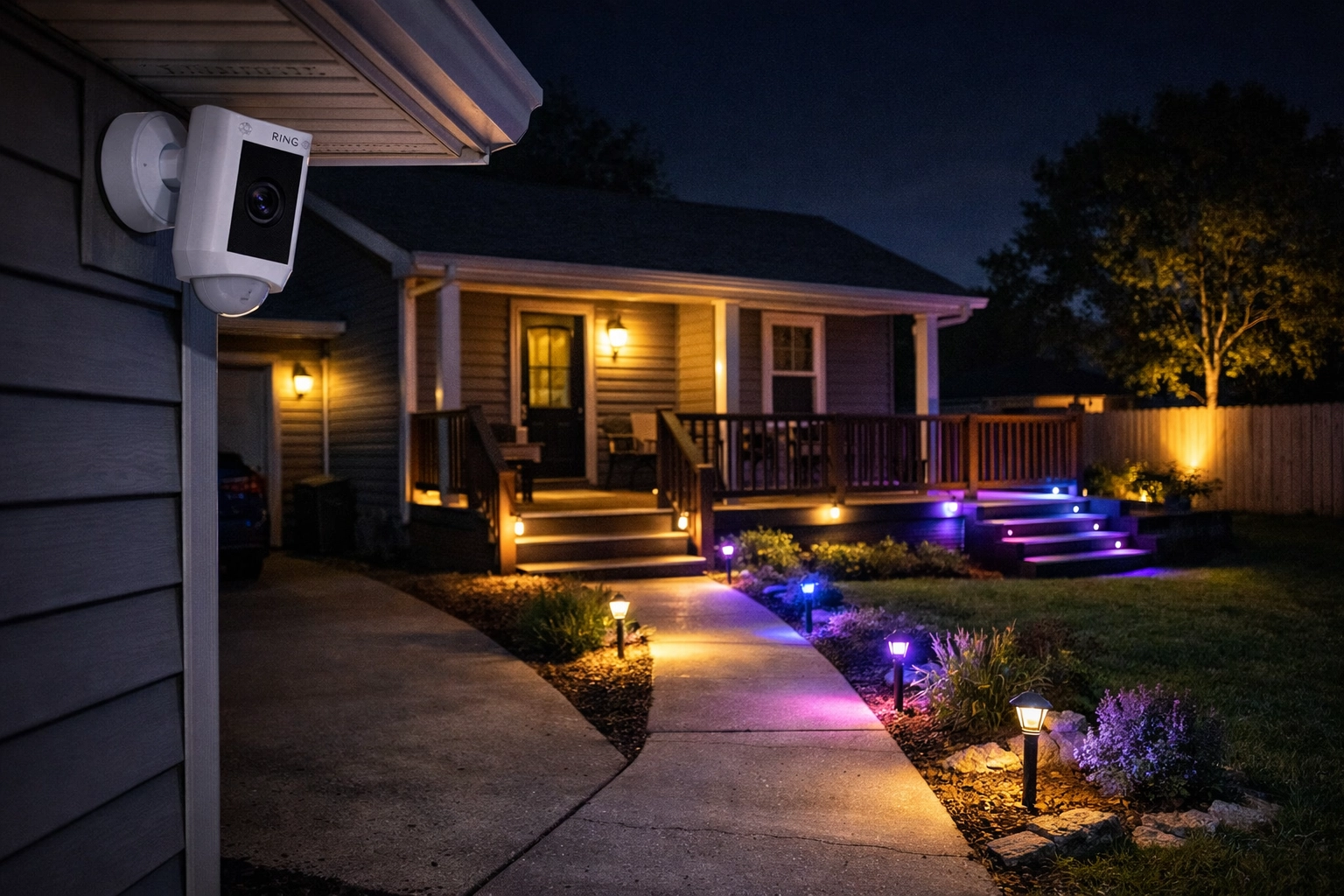
You dropped $200 on a Ring camera thinking you'd finally catch whoever's been messing with your packages. Then you check the footage after dark and it's just a grainy, useless blob that looks like a Bigfoot sighting from 1987.
Here's the truth nobody tells you at checkout: your camera is only as good as the light hitting your property. And if you're relying on those built-in infrared LEDs or the glow from a porch bulb, you're basically running a security system with one eye closed.
Ring's infrared night vision sounds great in theory. Flip to night mode, see in the dark, catch the bad guys. Except infrared footage looks like garbage: black and white, grainy as hell, and if someone's wearing a hat or hood, forget about identifying anything useful.
The research backs this up. Testing shows that footage captured without ambient light or infrared isn't usable. And even with infrared on, you're getting significantly lower quality video than daytime recordings. That's because your camera's sensor needs actual light: not just infrared wavelengths: to capture clear, color images.
Ring tried to fix this with their "Low-Light Sight" feature, which uses better sensors to grab color in near-dark conditions. But here's the kicker: it still requires ambient lighting to work. No ambient light? You're back to grainy infrared mode.
Ambient lighting is just a fancy term for "light that's already there": street lights, your neighbor's floodlight, the moon if you're lucky. Problem is, most Lexington neighborhoods don't have street lights bright enough to illuminate your entire property, especially if you're on a street like Clays Mill or out toward Hamburg where lots are bigger and spacing is wider.
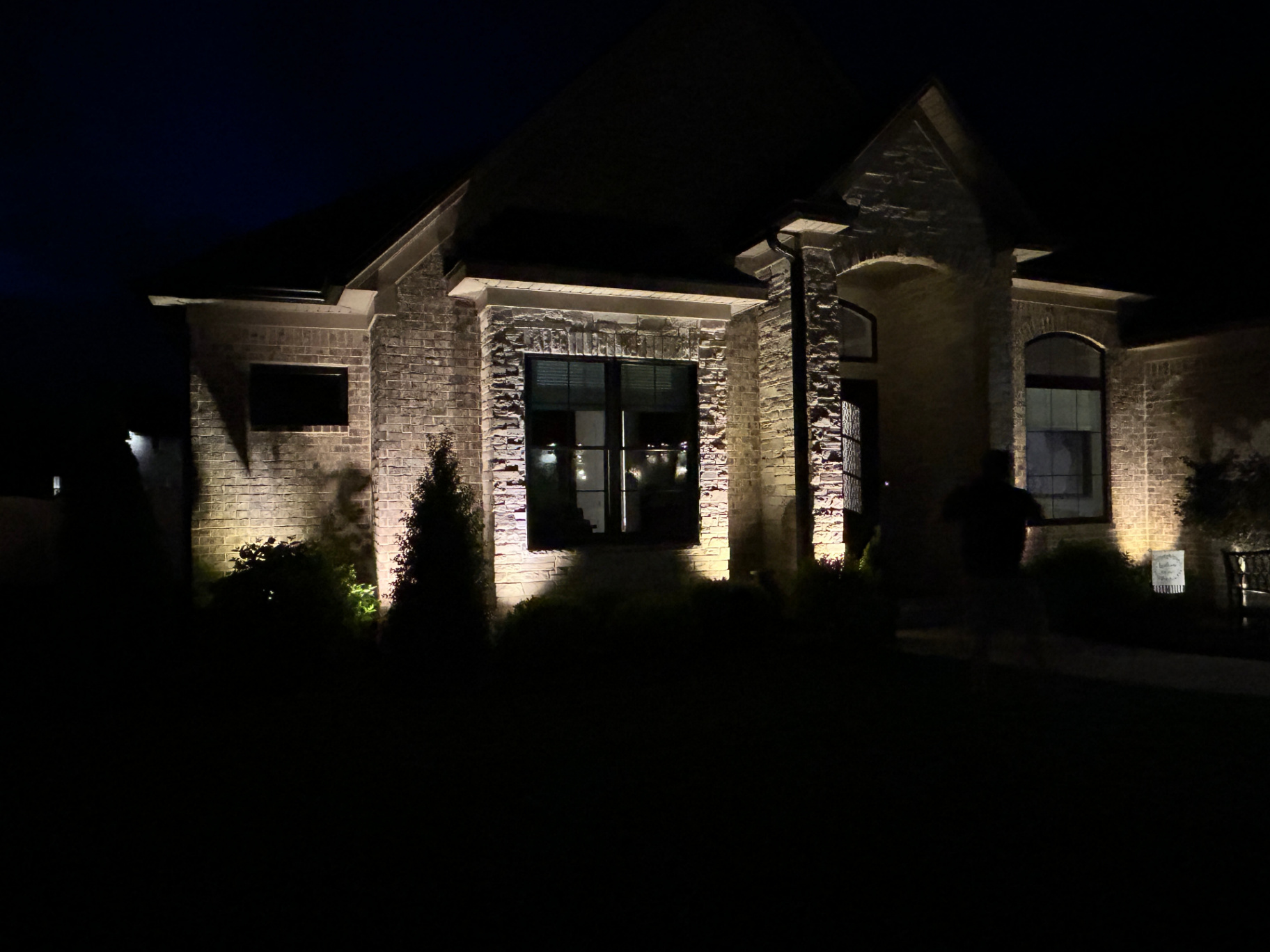
And if you think a single porch light does the job, check your footage. You'll see a bright spot right under the bulb and complete blackness everywhere else. That's not security coverage: that's a spotlight telling everyone exactly where your blind spots are.
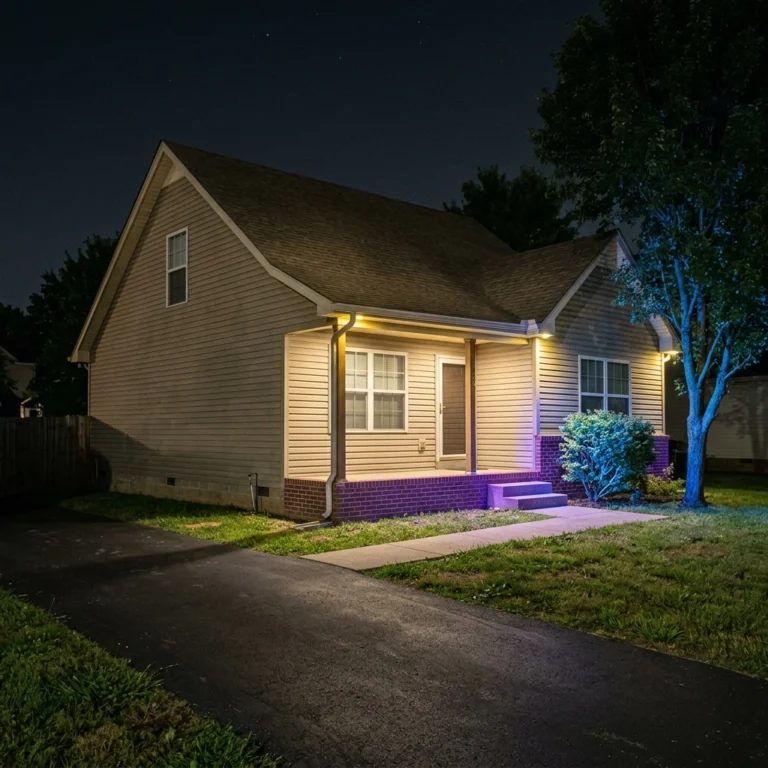
Here's where it gets worse. Poor lighting doesn't just make things dark: it creates harsh shadows that turn your yard into a hide-and-seek playground. Someone walking along the side of your house? If your only light source is a floodlight pointed straight down from the eaves, they're moving through alternating patches of glare and pitch black.
Your Ring camera's sensor freaks out trying to handle both extremes at once. The result? Washed-out bright zones and pure black shadows where detail completely disappears. You might see something moving, but good luck making out features, clothing, or whether they're carrying something.
This is especially true in neighborhoods like Chevy Chase or Ashland Park where mature trees create natural cover. Add bad lighting to the mix and your camera's basically recording abstract art.
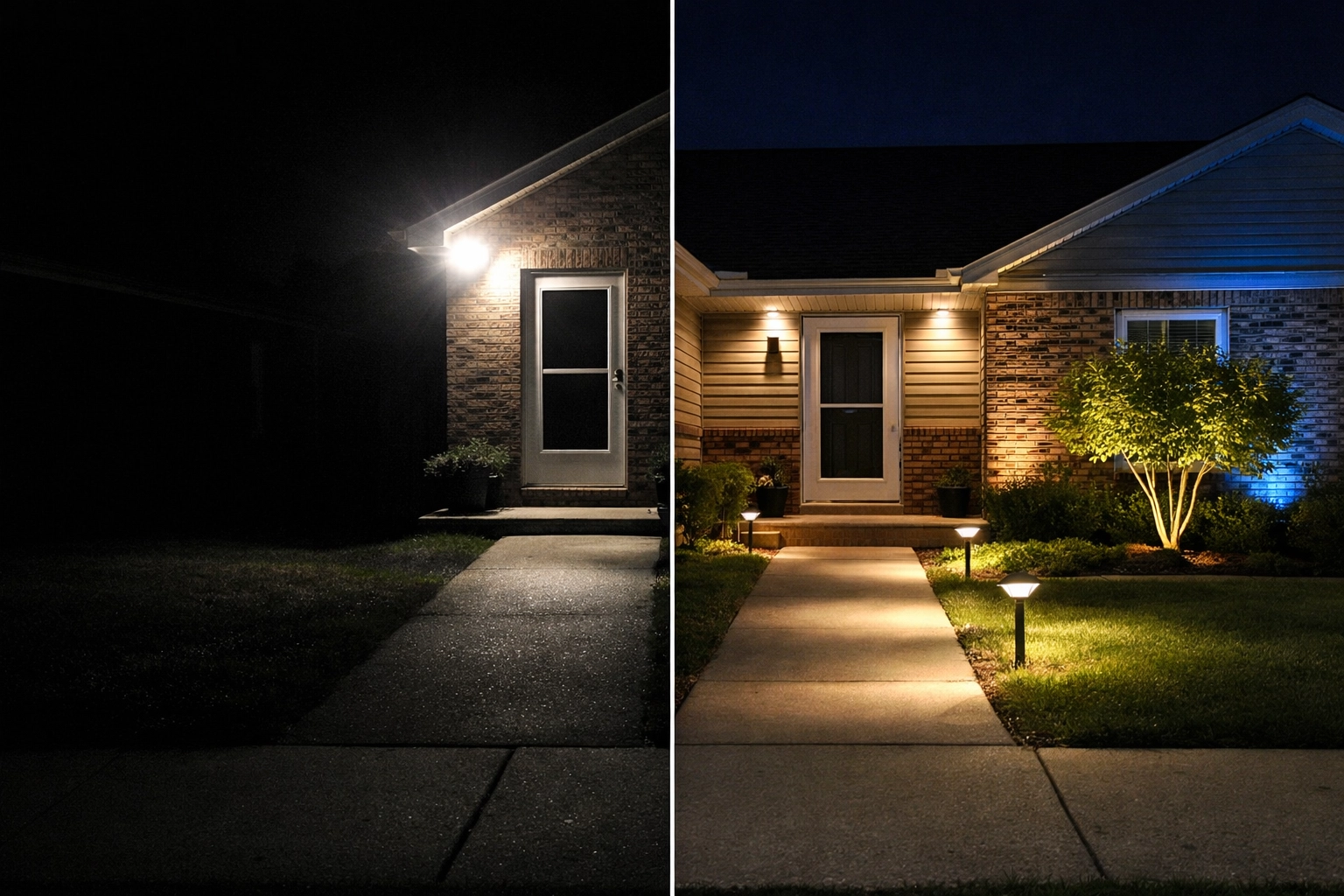
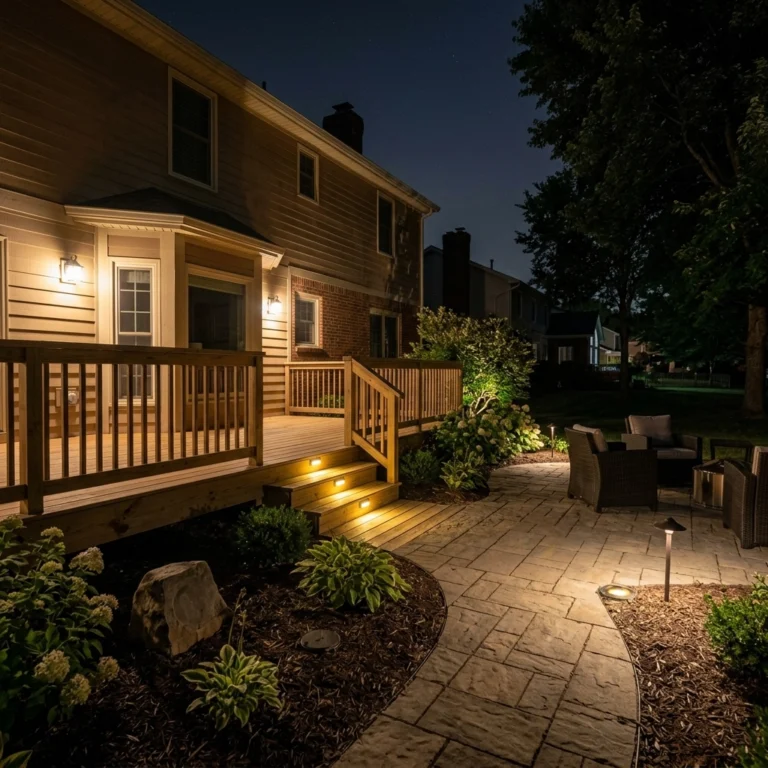
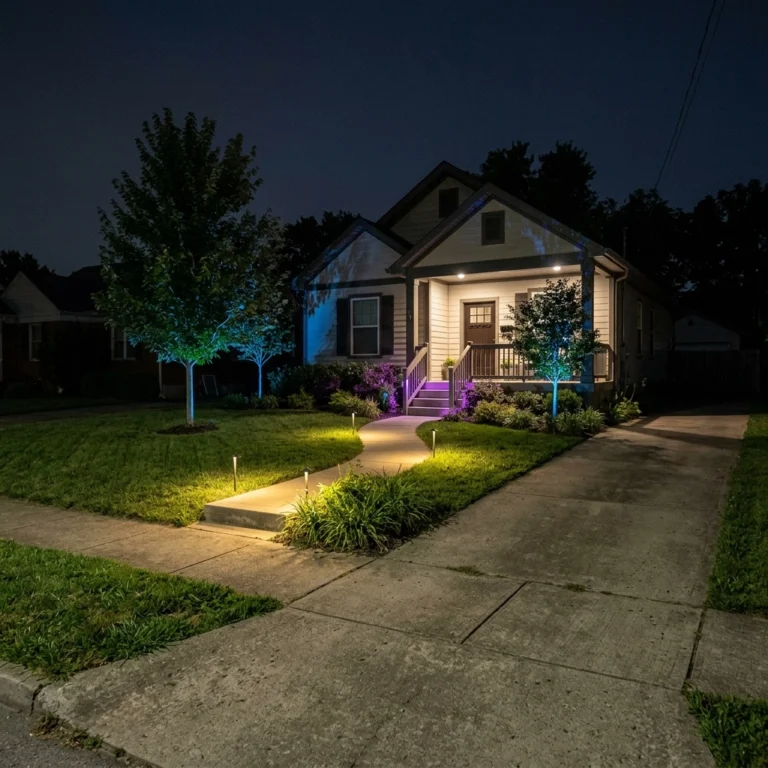
Professional low-voltage landscape and architectural lighting does something your porch light can't: it layers light across your property instead of blasting one spot and leaving the rest in darkness.
When we install architectural lighting on a Lexington home, we're thinking about:
The setup in that photo above? That's not just curb appeal. Those fixtures lighting the brick facade, the walkway, and the landscaping create overlapping zones of visibility that let a security camera actually see what's happening. No blown-out hot spots, no dead zones.
Let's be real about why this matters locally. Property crime in Lexington isn't going away, and neighborhoods like Hamburg, Hartland, and even parts of Beaumont see their share of porch pirate activity and car break-ins. You bought the camera to feel safer. But if your footage can't identify someone because they're backlit or hidden in shadow, you just wasted money on a fancy doorbell.
Good lighting doesn't just help after something happens: it's a deterrent before anything goes down. Homes with proper exterior lighting get passed over because criminals don't want to be seen. It's that simple.
You don't need stadium lights. You need smart, professional placement:
Path lighting along walkways and driveways – Low-voltage fixtures every 8–10 feet create continuous visibility without glare. Your camera can track someone's full approach instead of losing them between light pools.
Soffit and eave lighting – Downlighting from under your roofline evenly washes your walls and entryway. No harsh shadows, no blown-out highlights. Just clean, even coverage that cameras love.
Accent uplighting on trees and architectural features – This adds depth and dimension, giving your camera's sensor more visual information to work with. Plus it looks incredible.
No floodlights aimed at the camera – Seriously, don't do this. You'll blind your own camera and create a silhouette effect where anyone approaching is just a dark shape.
Your Ring camera isn't broken. It's just trying to do an impossible job with bad lighting. If you want footage that's actually useful: color images, clear faces, readable license plates: you need to give it the light it's designed to work with.
And here in Lexington, where we've got a mix of well-lit neighborhoods and darker county roads, the difference between "I think that's a person" and "I can clearly see their face" comes down to whether you've invested in real exterior lighting or you're hoping a $15 LED bulb from Lowe's does the trick.
We've been lighting homes across Central Kentucky long enough to know what works and what's a waste of money. If your current setup isn't cutting it, we can walk your property and show you exactly what your camera's missing. No pressure, no upsell: just straight talk about what'll actually make your home safer.
If you want a simple place to start, check out our professional security lighting solutions at www.eveningglowllc.com, or look through our landscape lighting services. You can also shoot us a message at eveningglowllc.com/contact. We'll help you see what you've been missing, literally.