Physical Address
304 North Cardinal St.
Dorchester Center, MA 02124
Physical Address
304 North Cardinal St.
Dorchester Center, MA 02124
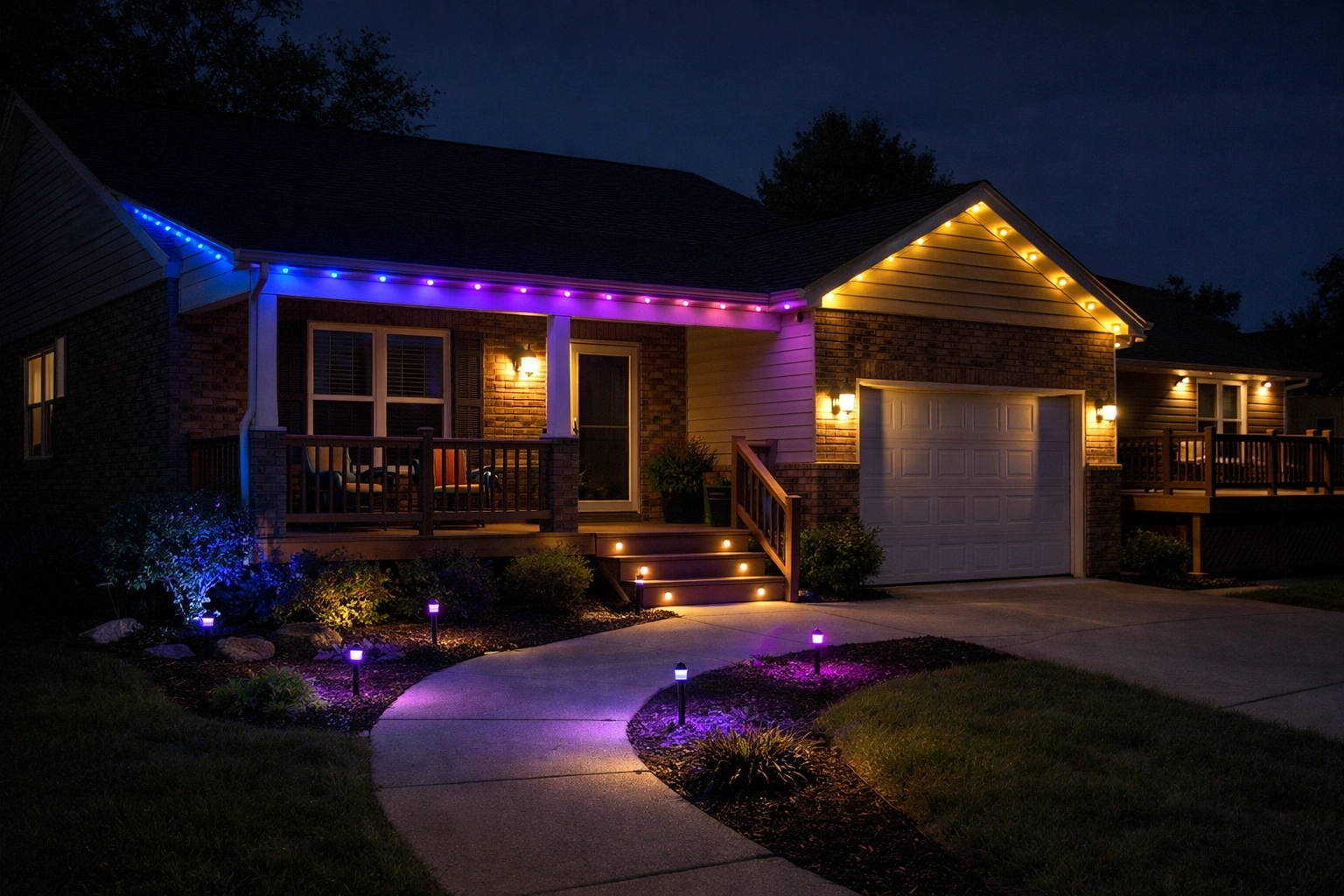
Quick answer: Compare smart control features, brightness output, weather durability for Kentucky's climate, warranty coverage, and total cost including installation. The best system for your Lexington home disappears by day, survives our weather swings, and gives you full control from your phone.
Read time: 6 minutes
You're done dragging the ladder out every November. You're tired of untangling lights that lasted exactly one season. And honestly? You want your Chevy Chase colonial or Beaumont estate to look sharp year-round, not just during the holidays.
Permanent outdoor lighting isn't a trend anymore, it's how homeowners across Central Kentucky are handling curb appeal, security, and those "wow" moments when guests pull up. But not all systems are created equal, and choosing the wrong one means you're either stuck with visible daytime hardware or calling for service every six months.
Here's how to actually evaluate your options without the sales pitch.
Kentucky weather isn't gentle. We get ice storms in February, 90-degree humidity in July, and everything in between. Traditional string lights fail here: fast. Cheap plastic clips crack, wiring corrodes, and those solar pathway lights? They're decorative at best after one winter in our clay soil.
Permanent systems are engineered differently. They use commercial-grade LEDs, sealed track housing, and low-voltage wiring designed to handle temperature swings from single digits to triple digits. You're not replacing bulbs. You're not re-hanging sections after windstorms. You set it once, control it from your phone, and forget about it.
That's the point.
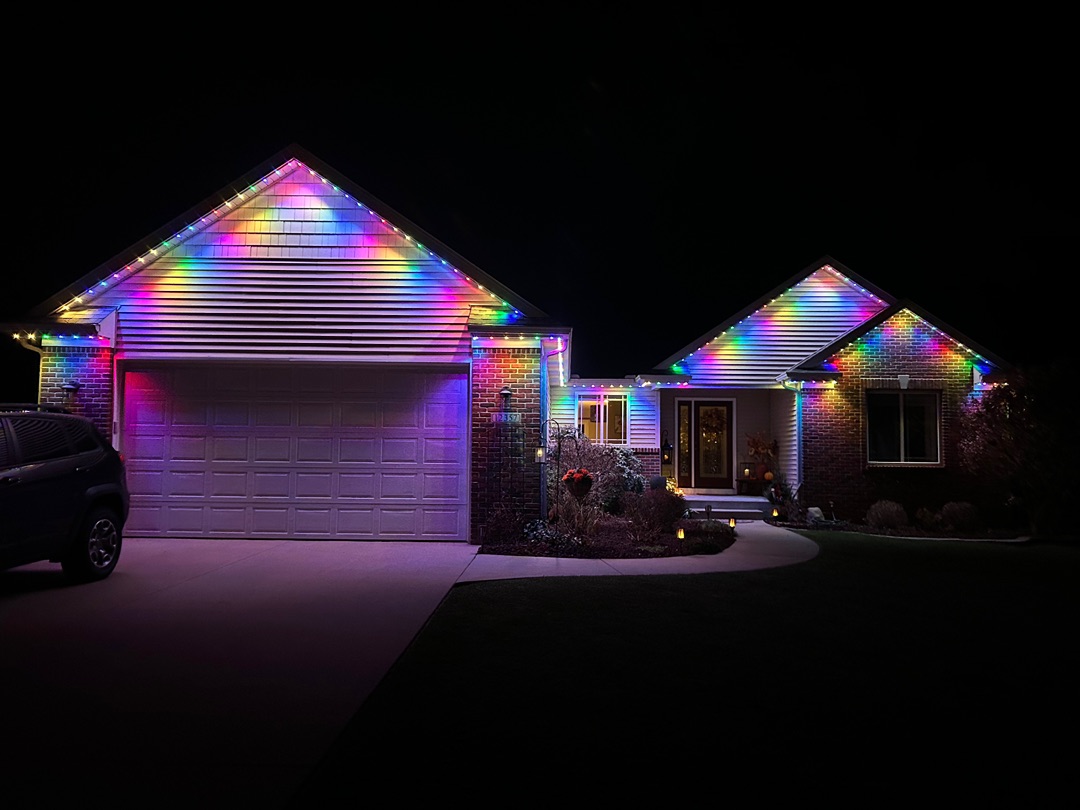
Every permanent lighting company will tell you they have an app. That's table stakes. What separates systems is how much control you actually get.
Look for individual light control: not just zones. If you want your front columns in warm white and your roofline in Kentucky blue for game day, you should be able to do that without calling a tech. Cloud-based hubs give you remote access from anywhere, which matters when you're out of town and want to adjust security lighting or turn off holiday colors after New Year's.
RGBWW bulbs (red, green, blue, double warm white) give you the full spectrum. Cheaper systems use RGB-only, which means your whites look washed out and your holiday reds look orange under certain conditions. Not ideal when you're competing with the Beaumont Country Club crowd for best-lit home on the block.
Scheduling should be simple. Sunrise/sunset automation. Custom timers. Pre-programmed scenes for holidays, parties, or just everyday elegance. If it takes you more than 30 seconds to change your lighting from your couch, the system's overcomplicated.
Here's where specs matter. Lumens per bulb and lumens per linear foot determine whether your lighting actually illuminates or just decorates.
For architectural accent lighting along rooflines and soffits, you want 60-100 lumens per foot at full brightness. That's enough to highlight features without turning your home into a stadium. Individual bulbs should hit around 46 lumens to maintain even spacing and avoid dark spots between fixtures.
Under-powered systems look fine in the showroom but disappointing on your actual property. Ask for lumen specifications before you commit. If a company won't give you numbers, that's a red flag.
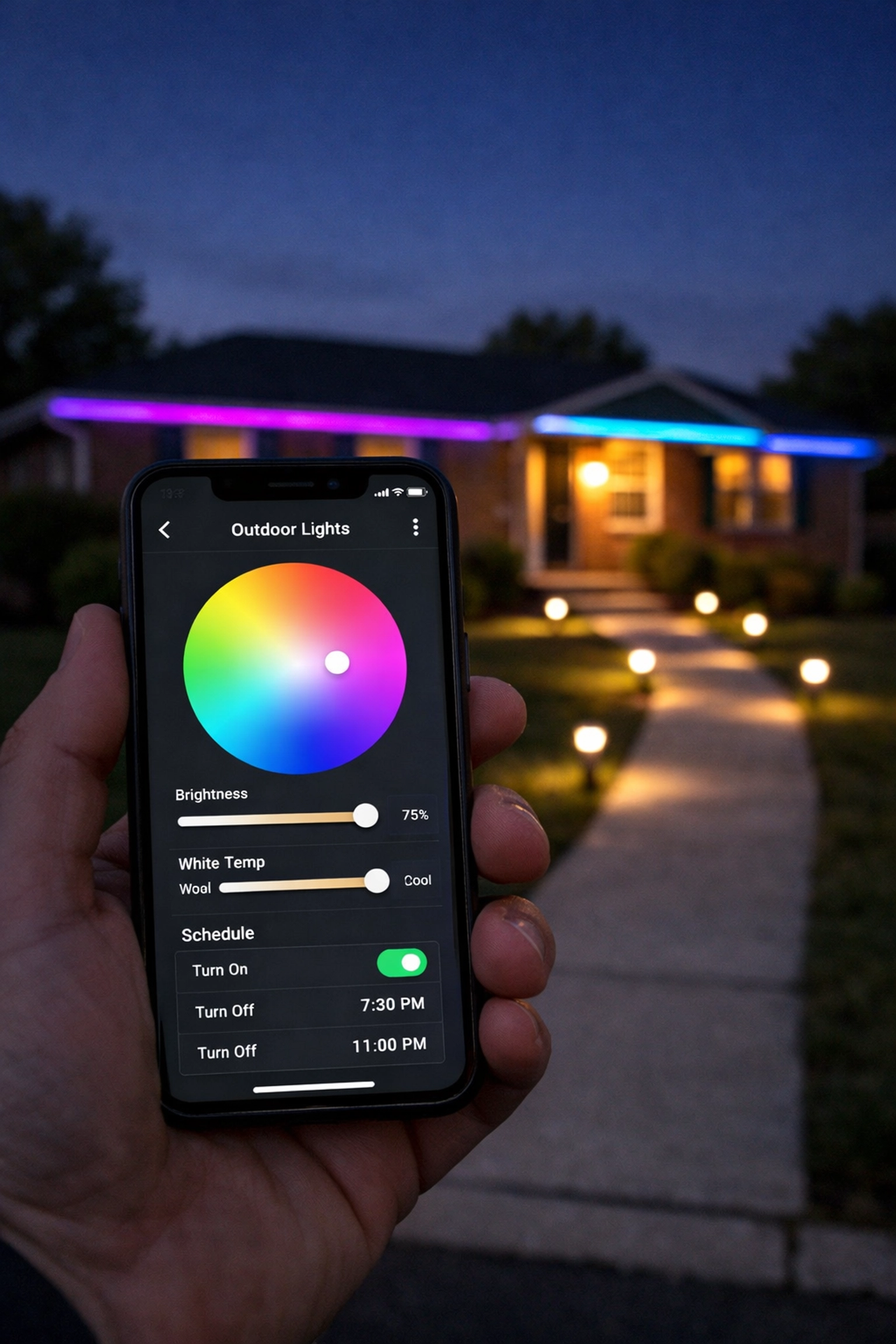
Our climate breaks things. Any permanent outdoor lighting system you install needs to survive:
Look for sealed, weatherproof track systems with corrosion-resistant materials. Aluminum housings outlast plastic. Silicone-sealed connections outlast exposed wiring. LED bulbs rated for outdoor use have protective coatings that prevent moisture intrusion.
If the company designed their system in Arizona or Florida, ask how it performs in actual Kentucky conditions. Systems engineered for Canadian winters and hot summers translate well here. Systems built for mild coastal climates? Not so much.
A "lifetime warranty" sounds great until you realize it only covers the bulbs, not the control hub, wiring, or labor. Compare what's actually included:
Product warranty: How long are the physical components covered? LEDs should last 50,000+ hours, but tracks, hubs, and transformers also need protection.
Labor warranty: Who pays if something needs service in year three? Some companies cover parts but charge $200 for a service call. Others include both.
Functionality guarantee: What happens if the system stops working as designed? A true lifetime warranty on quality and functionality means the company stands behind performance, not just materials.
Get it in writing. Ask what's excluded. Verify whether warranty service requires using the original installer or if any licensed electrician can handle repairs.
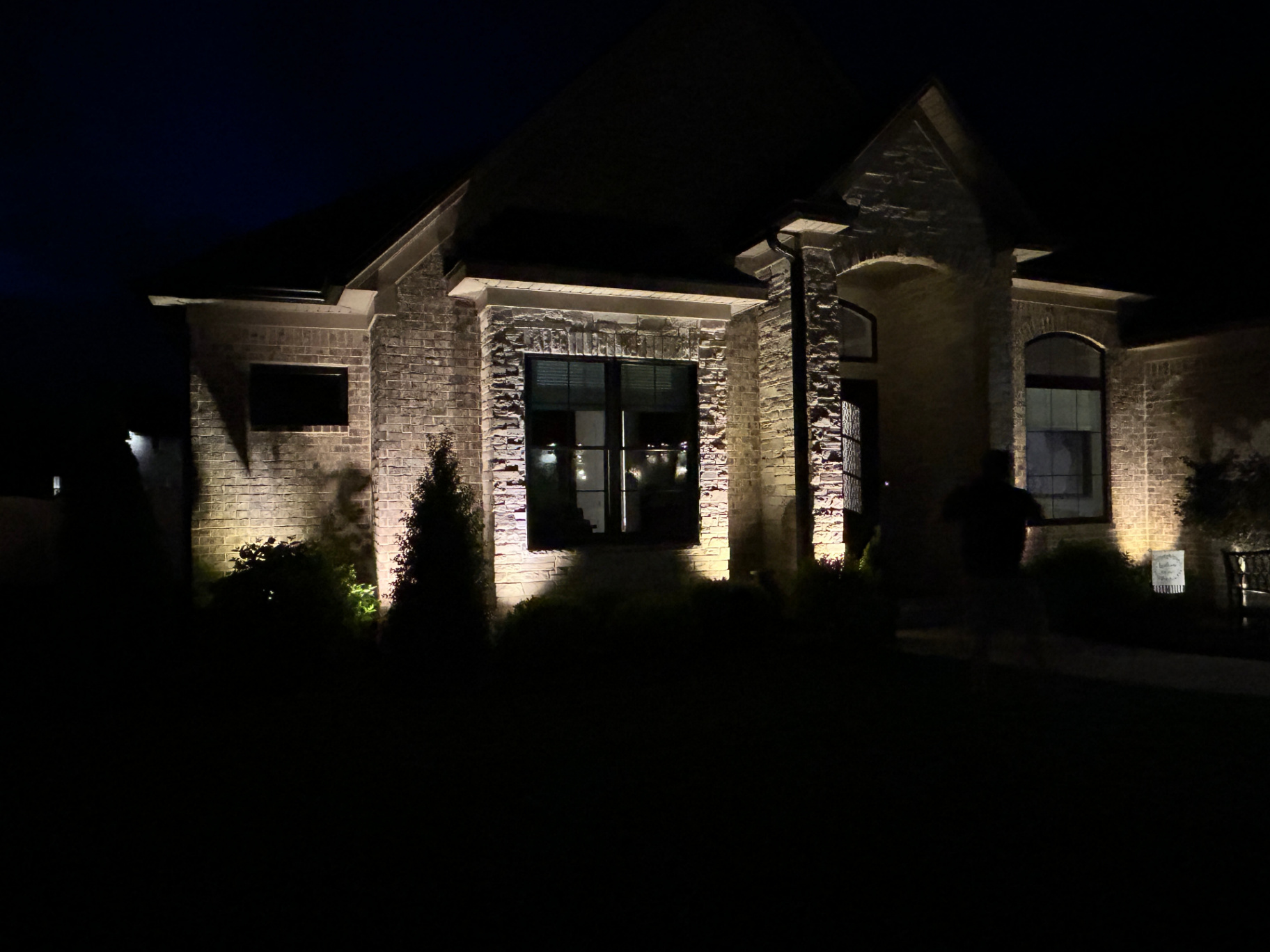
The best system in the world looks terrible if it's installed poorly. Permanent lighting should be completely invisible during daylight: no visible wiring, no bulky clips, no obvious tracks.
Professional installers route wiring through soffits, behind fascia boards, or inside architectural features. Track systems mount flush to surfaces and match your home's color scheme. Bulbs sit recessed so they blend into rooflines, columns, and trim.
Walk past a few completed projects in person before you sign anything. If you can spot the lighting system from the street in broad daylight, keep shopping.
Entry-level permanent systems in Lexington start around $1,700 for basic coverage. Full-home installations with premium features, extensive linear footage, and custom zones run $5,000-$12,000+ depending on property size and complexity.
Compare that to:
Most homeowners break even in 5-7 years, then enjoy free lighting and curb appeal for decades. The real value isn't just financial: it's never climbing a ladder in December again and having pro-level lighting control at your fingertips year-round.
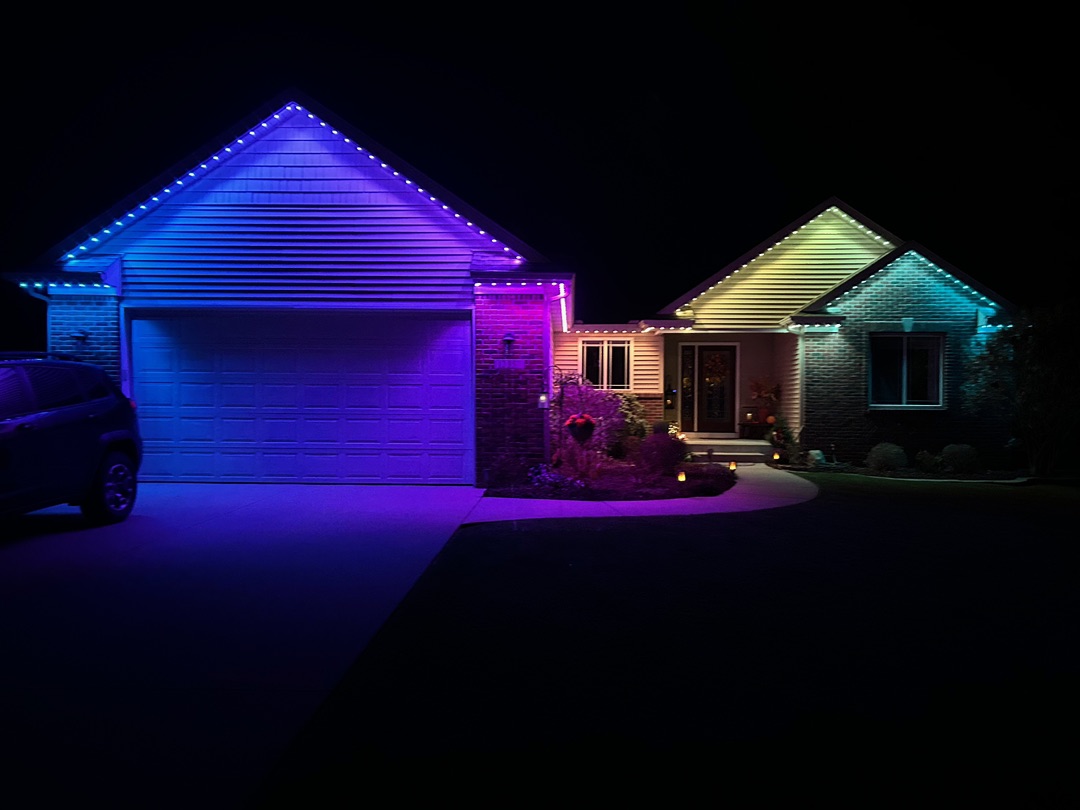
Start with a free consultation from at least two providers. Walk your property with them. Ask specific questions:
Clarify what you want to accomplish. Holiday lighting only? Year-round architectural accents? Security and pathway illumination? The right system depends on your goals, not the salesperson's preference.
Verify the company knows Lexington. Local installers understand how our climate affects outdoor systems, which neighborhoods have HOA restrictions, and how to design lighting that complements Kentucky architecture: whether you're lighting a horse farm in Midway or a historic brick home in Ashland Park.
Skip systems that:
Also avoid companies that won't show you completed local projects or provide customer references. If they've been operating in Lexington for less than a year, you're taking a risk on an unproven installer.
Choosing permanent outdoor lighting for your Lexington home comes down to control, durability, and invisible-by-day installation. The best system gives you full customization, survives Kentucky weather, and looks like nothing's there until you turn it on.
At Evening Glow LLC, we specialize in exactly that: permanent architectural lighting designed for Central Kentucky homes, backed by our veteran-owned commitment to quality and a lifetime warranty on everything we install. If you're ready to stop dealing with seasonal lighting hassles and start enjoying professional-grade illumination year-round, we're here to help.
Check out our permanent architectural lighting services or reach out for a free consultation. We'll walk your property, answer your questions, and design a system that actually fits your home and your lifestyle: no sales pitch required.